
Flying insects buzzing through your living room or hovering over your kitchen sink aren’t just annoying, they’re a sign something’s drawing them in. Whether it’s fruit flies multiplying in the compost, fungus gnats circling houseplants, or wasps finding gaps in your siding, most flying pest problems start with conditions you can control. The good news? You don’t always need an exterminator. With the right combination of exclusion, sanitation, and targeted treatments, most homeowners can knock down a flying insect problem themselves. This guide walks through identification, DIY solutions, chemical options, and when it’s time to call in backup.
Table of Contents
ToggleKey Takeaways
- Proper identification of flying insect pests—such as fruit flies, fungus gnats, drain flies, and wasps—is essential because treatments that work for one species won’t be effective for another.
- Flying insect pest control is most effective when combining exclusion (sealing gaps), sanitation (removing food and moisture sources), and targeted treatments rather than relying on any single method alone.
- Natural DIY solutions like apple cider vinegar traps and sticky cards work for minor infestations, but addressing underlying causes such as moisture, food sources, and structural gaps is critical for lasting control.
- Chemical treatments including pyrethrin sprays, insect growth regulators, and residual barrier sprays provide faster results when DIY methods aren’t sufficient, but EPA labels must be followed strictly for safety and effectiveness.
- Prevention through sealing entry points (⅛-inch or smaller gaps), moisture management, proper trash disposal, and outdoor lighting adjustments can reduce future infestations by 70% or more.
- Professional pest control is worth considering for active nests in difficult locations, persistent multi-species infestations, or situations involving health risks, since licensed operators have specialized tools and commercial-grade products.
Understanding Common Flying Insect Pests in Your Home
Identifying the pest is half the battle. Treatment that works for one species won’t touch another.
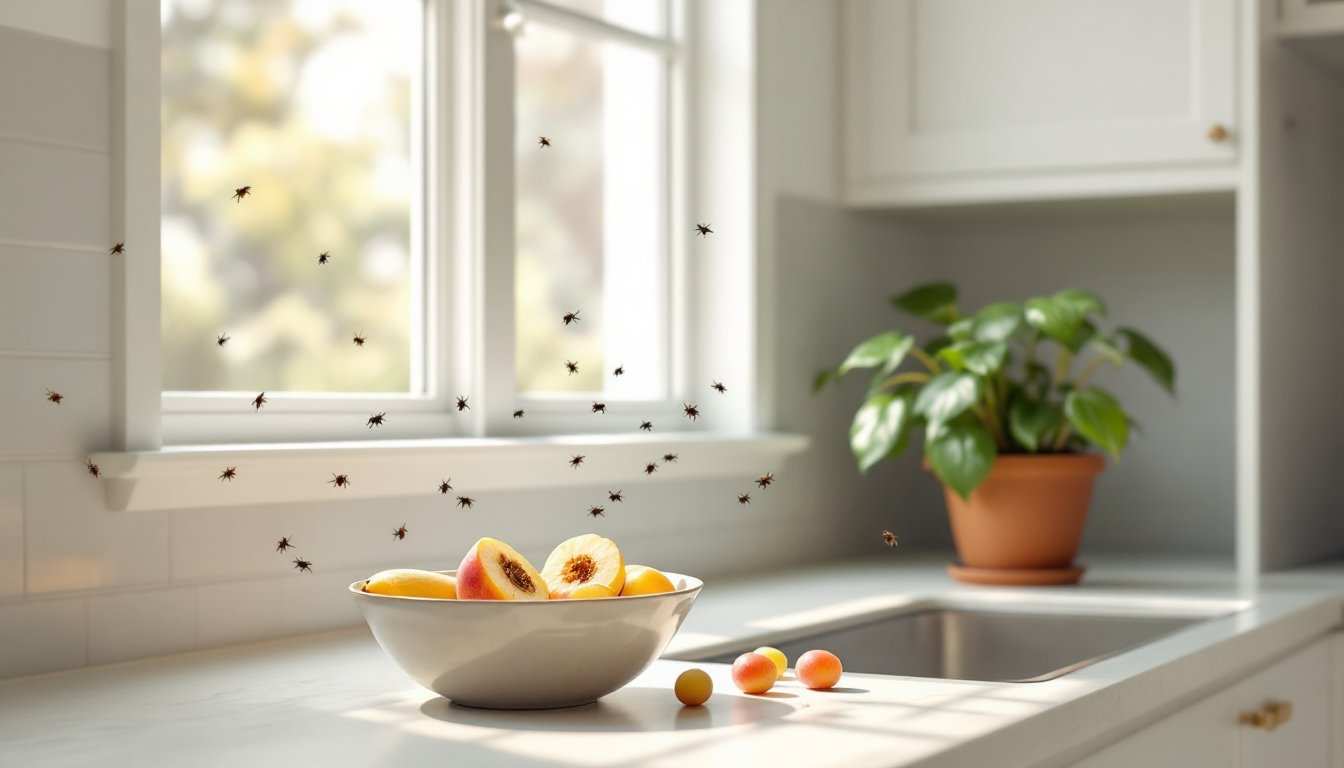
Fruit flies are tiny (⅛-inch), tan or brownish, with red eyes. They breed in fermenting organic matter, overripe fruit, drains, trash bins, even mop buckets. Their life cycle is fast: egg to adult in about a week under warm conditions.
Fungus gnats look similar but are darker, nearly black, and hang around potted plants. They thrive in moist soil where their larvae feed on organic material and roots. Overwatering is their best friend.
House flies are the classic ½-inch buzzer. They’re drawn to garbage, pet waste, and decaying organic material. They don’t bite, but they’re mechanical vectors for bacteria, landing on waste, then your countertop.
Drain flies (moth flies) are fuzzy, grayish, and about ⅛-inch long. They breed in the biofilm inside drains and love moisture. If you see them near sinks or floor drains, that’s your source.
Wasps, hornets, and yellow jackets are larger and far more aggressive, especially late summer when colonies peak. They nest in wall voids, eaves, attics, or underground. If you spot steady traffic to one location, there’s likely a nest.
Cluster flies are sluggish, slightly larger than house flies, and show up in fall or early spring. They overwinter in wall voids and attics, then emerge indoors when temps rise.
Knowing which pest you’re dealing with dictates your approach, chemical, mechanical, or environmental.
Why Flying Insects Invade Indoor Spaces
Flying insects don’t invade randomly. They’re following scent, moisture, light, or shelter cues.
Food and fermentation are major attractants. Fruit flies can smell rotting produce from blocks away. A forgotten onion under the sink or a juice spill behind the fridge is a breeding ground. Drain flies feed on the organic sludge in pipes, which builds up even in homes with garbage disposals.
Moisture issues invite fungus gnats, drain flies, and even some species of midges. Overwatered plants, leaky pipes, condensation in crawlspaces, and damp basements create ideal conditions. High indoor humidity (above 60%) accelerates reproduction.
Structural gaps let wasps, cluster flies, and house flies inside. Common entry points include:
- Gaps around window and door frames (anything over ⅛-inch)
- Torn or missing screens (16-mesh or finer is standard for most insects)
- Unsealed utility penetrations (AC lines, dryer vents, plumbing stacks)
- Damaged soffit or fascia boards
- Cracks in foundation or siding
Light at night draws many flying insects, especially around entryways. Porch lights, bathroom exhaust vents with backlit grilles, and even LED indicator lights on appliances can act as beacons.
Seasonal behavior explains cluster fly invasions in fall and spring. These insects use homes as overwintering sites. They don’t breed indoors, but once inside wall voids, they’ll emerge intermittently on warm days.
Addressing the “why” is more effective than swatting symptoms.
Natural and DIY Solutions for Flying Insect Control
For small-scale or low-toxicity control, natural methods can work, if you stick with them.
Apple cider vinegar traps handle fruit flies effectively. Pour ½-inch of apple cider vinegar into a jar, add a drop of dish soap to break surface tension, and cover with plastic wrap secured by a rubber band. Poke small holes (toothpick-sized) in the wrap. Flies enter, can’t escape, and drown. Replace every 2–3 days.
Sticky traps (yellow cards) work on fungus gnats and whiteflies. Place them just above soil level in potted plants. They won’t eliminate larvae in the soil, though. For that, let soil dry between waterings and consider top-dressing with fine sand or diatomaceous earth to disrupt the breeding cycle.
Drain cleaning is critical for drain flies. Remove standing water, then use a stiff brush (a bottle brush or specialty drain brush) to scrub the interior walls of the drain. Follow with boiling water. Enzymatic drain cleaners break down biofilm over several applications but won’t work instantly. Skip the bleach, it doesn’t penetrate the sludge layer where larvae live.
Essential oil sprays (peppermint, eucalyptus, lemongrass) can repel some insects, but effectiveness is limited and short-lived. They’re better as a supplement, not a standalone solution.
Exclusion and sanitation are the backbone of any natural approach. Seal food in airtight containers, take out trash daily, clean up pet waste immediately, and fix leaky faucets. For homeowners focusing on organic pest control, eliminating attractants is the first line of defense.
DIY wasp traps use sugar water or fruit juice in a cut-down soda bottle (inverted top acts as a funnel). These work for foraging wasps but won’t eliminate a nest. If you’re dealing with an active nest, attempting removal yourself isn’t safe unless it’s small (golf ball-sized) and in an accessible location. Wear protective clothing, work at dawn or dusk when wasps are sluggish, and have an escape route.
Chemical Treatments and Professional-Grade Products
When natural methods aren’t cutting it, chemical options provide faster, broader-spectrum control.
Pyrethrin-based sprays (derived from chrysanthemum flowers) are common for flying insects. They knock down flies, gnats, and wasps on contact. Synthetic pyrethroids (permethrin, bifenthrin) last longer and are found in most consumer aerosol sprays. Use only in well-ventilated areas, and never spray near food prep surfaces without thorough cleanup.
Insect growth regulators (IGRs) like methoprene disrupt larval development. They’re effective for drain flies and fungus gnats when applied to breeding sites (drains, soil). Results take longer, 7–14 days, but they break the reproductive cycle.
Residual sprays (containing bifenthrin or deltamethrin) can be applied to window frames, door thresholds, and other entry points. These create a barrier that kills insects on contact for several weeks. Follow label directions on dilution rates and dwell time. Wear nitrile gloves and a respirator with organic vapor cartridges when mixing concentrates.
Wasp and hornet sprays shoot a foam stream up to 20 feet, allowing treatment from a safer distance. Apply directly to nest openings at dusk. For ground nests, pour the product into the entrance, then cover with a flat stone or board. Never seal a nest during daylight, trapped wasps will find alternate exits, often into living spaces.
Fogging devices are overkill for most residential applications and don’t address breeding sites. They’re a temporary knockdown, not a cure. Many bug problem solutions rely on combining targeted chemical treatments with environmental changes for lasting results.
Read and follow the EPA-registered label. Mixing rates, reentry intervals, and PPE requirements aren’t suggestions, they’re legal mandates. Misuse voids liability and can create health risks.
Preventive Measures to Keep Flying Pests Out
Prevention is cheaper and less toxic than reactive treatment.
Seal structural gaps. Walk your home’s perimeter with a can of expanding foam or exterior-grade caulk. Focus on:
- Window and door frames (use weatherstripping for movable joints)
- Utility penetrations (HVAC lines, hose bibs, electrical conduits)
- Soffit vents (cover with ⅛-inch hardware cloth if pests are getting through standard vents)
- Foundation cracks wider than ⅛-inch
Repair or replace screens. Standard 16×16 mesh blocks most flies. For smaller pests like no-see-ums, upgrade to 20×20 mesh. Patch small tears with screen repair tape: replace full panels if damage is extensive. Use a spline roller for a tight fit, gaps around the frame defeat the purpose.
Manage moisture aggressively. Fix leaks within 48 hours (before mold sets in). Use dehumidifiers in basements to keep relative humidity below 50%. Check crawlspaces for standing water after heavy rain. For houseplants, allow the top 1–2 inches of soil to dry between waterings, this alone can eliminate fungus gnats.
Control outdoor lighting. Swap white bulbs for yellow “bug lights” or warm-spectrum LEDs near doors. These wavelengths are less attractive to insects. Install lights 15–20 feet from entryways so insects congregate there, not at your door.
Maintain gutters and downspouts. Clogged gutters create standing water, attracting mosquitoes and other moisture-loving pests. Clean them twice a year (spring and fall) and ensure downspouts direct water at least 6 feet from the foundation.
Trash and compost hygiene. Use bins with tight-fitting lids. Rinse recyclables before storing. If composting indoors, use a sealed countertop model with a carbon filter. Empty it every 2–3 days.
Implementing a comprehensive insect prevention plan reduces the chance of future infestations by 70% or more, according to integrated pest management research.
When to Call a Professional Exterminator
Some situations are beyond DIY scope or risk tolerance.
Active wasp or hornet nests in difficult locations, inside walls, high on second-story eaves, or underground near high-traffic areas, require professional removal. Pros have commercial-grade protective gear, extension poles, and access to products not available to consumers.
Persistent infestations that don’t respond to repeated DIY efforts may indicate a hidden breeding site (like a dead rodent in a wall void attracting blow flies) or a structural issue you haven’t identified. Licensed pest control operators (PCOs) have inspection tools like borescopes and moisture meters.
Large-scale or multi-species infestations often need integrated treatment plans. A house with both fruit flies and cluster flies, for example, requires different strategies applied simultaneously.
Health or safety concerns. If someone in the household has severe allergies to stings, or if you’re dealing with biting flies in quantity, don’t gamble. Professionals can assess risk and apply treatments safely.
Legal or regulatory issues. Some jurisdictions require permits for certain treatments or nest removals, particularly for protected species (like certain native bees). Verify local regulations before proceeding. For those in commercial settings needing pest solutions, commercial pest control specialists often handle compliance documentation.
When hiring, verify the company is licensed (requirements vary by state) and insured. Ask about their inspection process, treatment methods, and any guarantees. Reputable providers will offer a written estimate and explain the products they’ll use. According to Angi, average costs for insect control range from $100–$500 depending on severity and square footage, though wasp nest removal can run higher for difficult access.
A good PCO will also identify contributing factors and recommend fixes, because no amount of spraying will solve a problem if you’re still leaving doors to breeding sites wide open.
Conclusion
Flying insect control comes down to understanding what’s attracting them, removing those conditions, and using the right treatment for the species. Most homeowners can handle fruit flies, fungus gnats, and minor fly problems with sanitation and traps. Chemical treatments add muscle when needed, but they’re not a substitute for fixing moisture issues or sealing entry points. And when you’re staring down a wasp nest or a mystery infestation that won’t quit, calling a pro isn’t defeat, it’s smart risk management.