
Seeing one roach scuttle across your kitchen floor often means dozens more are hiding in the walls. Professional pest control can end the problem fast, but the cost depends on how bad the infestation is, the treatment method your exterminator uses, and whether you need a one-time visit or ongoing service. Prices for roach control typically range from $100 to $600 per treatment, though severe infestations or larger homes can push costs higher. This guide breaks down what homeowners can expect to pay in 2026, what influences those numbers, and when DIY methods might save the call.
Table of Contents
ToggleKey Takeaways
- Professional roach control costs between $100 and $600 per treatment, with the national average around $250, varying by infestation severity and home size.
- Ongoing pest control service plans ($40–$75 monthly) often provide better long-term value than one-time treatments for recurring roach problems, especially with German roach infestations.
- Treatment method significantly impacts pricing: gel bait costs $100–$200, while fumigation for severe infestations ranges from $2,000–$6,000 depending on home size.
- Geographic location and technician accessibility affect quotes substantially—urban areas charge 20–30% more than rural zones, and hard-to-reach areas add $50–$150 in extra fees.
- DIY roach control can cost $20–$100 for small, early-stage infestations but should be abandoned within three weeks if activity persists to prevent colonies from growing and treatment costs from escalating.
- Choose a licensed pest control service with transparent treatment methods, written guarantees, and verification of credentials rather than prioritizing the lowest quote to avoid ineffective treatments.
Average Cost of Professional Roach Extermination
Most homeowners pay between $100 and $400 for a single professional roach treatment, with the national average hovering around $250 as of 2026. Light infestations in smaller homes (under 1,500 square feet) usually fall on the lower end, while moderate to heavy infestations in larger properties push costs upward. Fumigation or whole-home treatments for severe cases can run $400 to $600 or more, especially if multiple rooms or structural voids need attention.
Pricing also varies by region. Urban markets with higher labor costs, think major metro areas, often charge 20–30% more than rural or suburban zones. The type of roach matters, too. German roaches, which reproduce rapidly and hide in tight crevices, often require more intensive treatment than American or Oriental roaches.
Most pest control companies offer free inspections to assess the scope before quoting a price. Expect the technician to check kitchens, bathrooms, basements, and crawl spaces, roaches love moisture and food sources. After the inspection, you’ll get a written estimate that should detail the treatment method, number of visits, and any follow-up included.
One-Time Treatment vs. Ongoing Service Plans
A one-time treatment costs less upfront, typically $100 to $300, but it only addresses the current roach population. If conditions that attracted roaches (leaks, food debris, entry points) aren’t fixed, they’ll return. One-time visits work best for minor infestations caught early or when combined with aggressive homeowner follow-up.
Ongoing service plans run $40 to $75 per month or $300 to $600 annually, depending on visit frequency. Most plans include quarterly treatments, with technicians re-treating high-risk areas and inspecting for new activity. These contracts often cover other pests, ants, spiders, silverfish, making them a better value if you live in an area prone to multiple infestations. Many companies knock 10–15% off the per-visit rate when you sign an annual agreement.
Monthly plans make sense for persistent German roach problems or homes near restaurants, storm drains, or wooded areas where roaches migrate seasonally. If you’ve had recurring issues, the cost of three or four emergency call-outs usually exceeds a year of preventive service.
Factors That Affect Roach Control Pricing
Extermination costs aren’t one-size-fits-all. Several variables shift the final bill, and understanding them helps you anticipate quotes and avoid surprises.
Infestation severity is the biggest lever. A handful of roaches spotted in one room might only need gel bait and crack-and-crevice spray, a quick job. But if you’re seeing roaches in daylight (a sign of overcrowding) or finding egg cases and fecal smears throughout the home, expect multi-stage treatment with higher labor and material costs. According to industry data, minor infestations cost $100 to $400, while heavy infestations can hit $600 or more.
Type of roach also matters. German roaches are the toughest to eliminate because they reproduce every six weeks and resist many over-the-counter products. Treatments for German roaches often require insect growth regulators (IGRs) and multiple follow-ups. American roaches, by contrast, are larger, slower to breed, and easier to bait.
Geographic location drives labor rates. A roach treatment in San Francisco or New York City will cost more than the same service in rural Georgia or Iowa. Material costs stay fairly consistent, but technician wages and overhead don’t.
Accessibility can add fees. If your infestation centers on a crawl space, attic, or wall voids, the crew may need to drill, remove panels, or use specialized dusting equipment. Expect an extra $50 to $150 for hard-to-reach applications.
Finally, guarantees and warranties influence price. Some companies include a 30- or 60-day re-treatment guarantee in the base cost: others charge more for that peace of mind. Always ask what’s covered if roaches return within the warranty window.
Infestation Severity and Home Size
Home size and infestation level are closely linked. A 1,000-square-foot apartment with a minor German roach problem might cost $100 to $200 for a one-time treatment. A 3,000-square-foot house with roaches in the kitchen, bathrooms, and basement could run $400 to $600 because the technician needs to treat more linear feet of baseboards, more cabinets, and more entry points.
Severity tiers typically break down like this:
- Light: Spotting a few roaches at night, minimal droppings. One or two treatments usually suffice. Cost: $100–$200.
- Moderate: Regular sightings, droppings in multiple rooms, egg cases present. Requires initial knockdown treatment plus follow-up. Cost: $250–$400.
- Heavy: Roaches visible during the day, strong odor, widespread fecal smears. May need fumigation or multiple visits over several weeks. Cost: $400–$600+.
Larger homes also mean more bait stations, more crack-and-crevice spray, and more labor hours. Some companies charge by the square foot, $0.10 to $0.25 per square foot, for whole-home applications.
Types of Roach Treatment Methods and Their Costs
Pest control pros use several approaches, each with different price points and effectiveness.
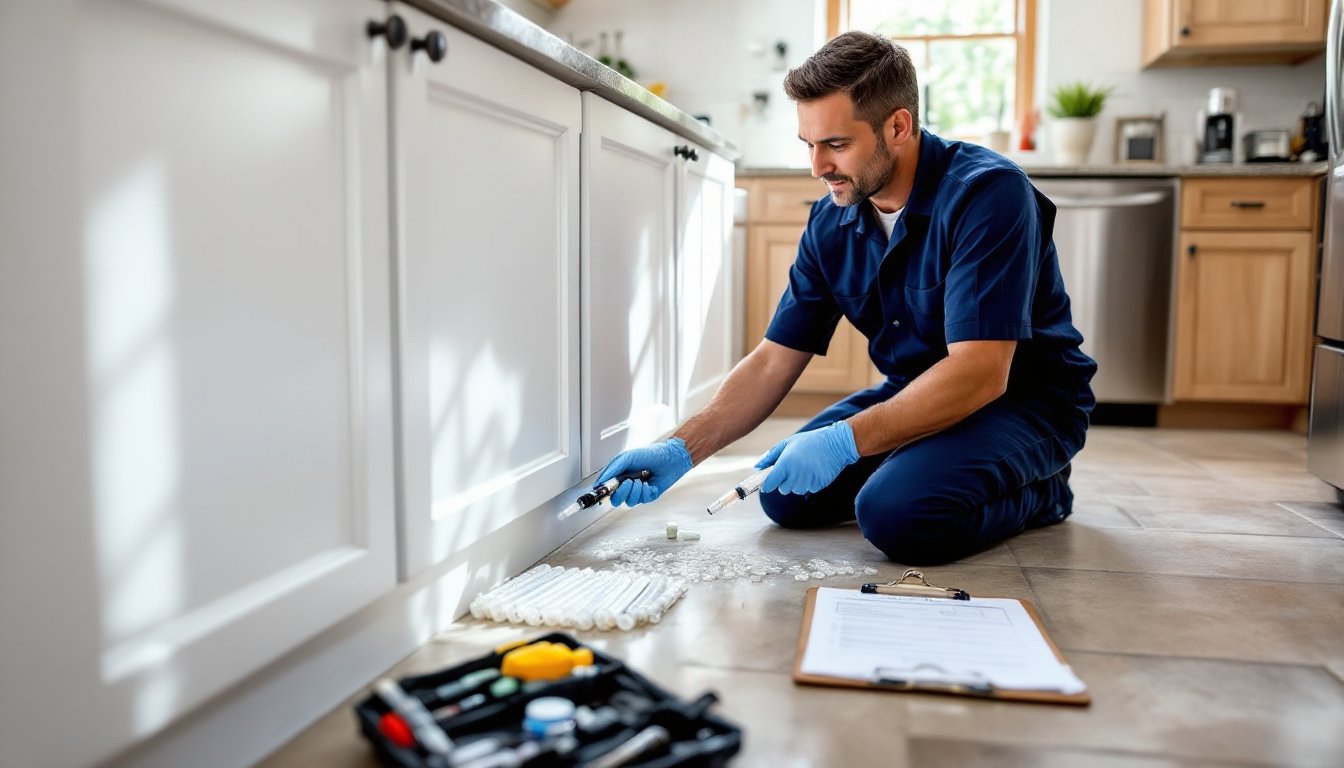
Gel bait is the workhorse for most residential roach jobs. Technicians apply bead-sized dots in cracks, behind appliances, and along baseboards. Roaches eat the bait, return to their harborage, and die: other roaches consume the carcasses and poisoned feces, spreading the effect. Gel bait treatments cost $100 to $200 and work well for light to moderate infestations. Results take 7–14 days as the bait cycles through the colony.
Crack-and-crevice spray uses liquid insecticides applied with a pin-stream nozzle into gaps where roaches hide. It’s often paired with gel bait for faster knockdown. Expect this combo to run $150 to $300.
Insect growth regulators (IGRs) disrupt roach reproduction by preventing nymphs from maturing. They’re not a standalone solution but boost the effectiveness of bait and spray. IGR treatments add $50 to $100 to the total cost.
Dust insecticides (like boric acid or diatomaceous earth) are applied in wall voids, attics, and crawl spaces where moisture is low. Dust clings to roach bodies, is ingested during grooming, and kills over several days. Dusting hard-to-reach areas costs $150 to $250, depending on access.
Fumigation is the nuclear option for severe, whole-home infestations. The property is tented, and a gas penetrates every crack. According to HomeAdvisor’s 2025 data, fumigation costs $1 to $3 per square foot, translating to $2,000 to $6,000 for a typical home. Fumigation requires vacating the property for 24–72 hours and removing all food, plants, and pets. It’s overkill for most roach problems but necessary for widespread German roach infestations that resist other methods.
Heat treatment raises the interior temperature to 130–140°F for several hours, killing roaches and eggs. It’s less common for roaches than bed bugs but effective in commercial settings. Cost: $800 to $2,500 depending on space size.
DIY Roach Control: Budget-Friendly Alternatives
For small, early-stage infestations, DIY roach control can cost $20 to $100 and may eliminate the problem if you’re diligent. But understand the limits: DIY works best when you’ve spotted fewer than five roaches over a week, and they’re confined to one or two rooms.
Gel bait syringes (Advion, Maxforce, Combat) cost $15 to $30 for a tube that treats an average kitchen. Apply pea-sized dots every 12 inches along baseboards, under sinks, and behind appliances. Replace every two weeks until activity stops. This is the same product pros use, just in smaller quantities.
Boric acid powder is a time-tested desiccant that dehydrates roaches. A 1-pound bottle runs $8 to $12. Dust it lightly in cabinets, under the refrigerator, and along plumbing penetrations. Don’t pile it, roaches avoid visible powder. Keep it dry: moisture kills its effectiveness.
Sticky traps cost $5 to $15 for a multi-pack and help you monitor activity and identify hot spots. Place them near water heaters, under sinks, and along baseboards. Check weekly.
Diatomaceous earth (DE) is another desiccant, safe for use around kids and pets if you buy food-grade DE. A 4-pound bag costs $10 to $15. Apply in wall voids, attics, and crawl spaces where moisture is low.
Safety note: Wear a dust mask when applying boric acid or DE, fine particles irritate lungs. Keep bait out of reach of children and pets, even though modern baits are low-toxicity.
DIY fails when the infestation is widespread, involves German roaches (which resist many consumer products), or when you can’t locate the harborage. If you’ve baited and trapped for three weeks with no reduction in activity, call a pro. Delaying only lets the colony grow, which raises the eventual extermination cost.
How to Choose the Right Pest Control Service
Hiring the cheapest company often backfires. Here’s what to prioritize:
Licensing and certification: Verify the company holds a valid pest control operator license in your state. Technicians should be certified through state programs or national organizations like the National Pest Management Association (NPMA). Ask to see credentials.
Treatment method transparency: A reputable company explains what products they’ll use, where they’ll apply them, and what safety precautions you should take (like clearing counters or vacating for a few hours). Avoid any outfit that refuses to name the active ingredients or says “it’s proprietary.”
Written estimates and guarantees: Get quotes in writing that itemize labor, materials, and follow-up visits. Ask about the warranty: if roaches return within 30 or 60 days, does the company re-treat at no charge? For larger properties or commercial spaces, commercial pest control plans often include extended warranties and quarterly inspections.
Reviews and references: Check Google, Yelp, and the Better Business Bureau. Look for patterns, one bad review isn’t a dealbreaker, but repeated complaints about missed appointments or ineffective treatment are red flags. Ask neighbors or your local hardware store for referrals.
Insurance: Confirm the company carries general liability and workers’ comp. If a technician damages your property or gets injured on-site, you don’t want to be liable.
Service flexibility: Some companies require annual contracts: others offer one-time visits. If you’re unsure how severe the problem is, start with a single treatment and scale up if needed.
Red flags: High-pressure sales tactics, quotes over the phone without an inspection, or guarantees that sound too good (“we’ll eliminate roaches forever in one visit”). Roach control often requires multiple visits and homeowner cooperation, there’s no magic bullet.
Finally, ask about prep work. Professional treatments work best when you’ve cleaned up food debris, fixed leaks, and pulled appliances away from walls. A good company provides a prep checklist a few days before the appointment. If they don’t, that’s a sign they’re rushing jobs.
Roach control costs vary, but paying for professional help early usually saves money compared to months of failed DIY attempts and spreading infestations. Get multiple quotes, verify credentials, and don’t skip the prep work, your exterminator can only do so much if conditions remain roach-friendly.