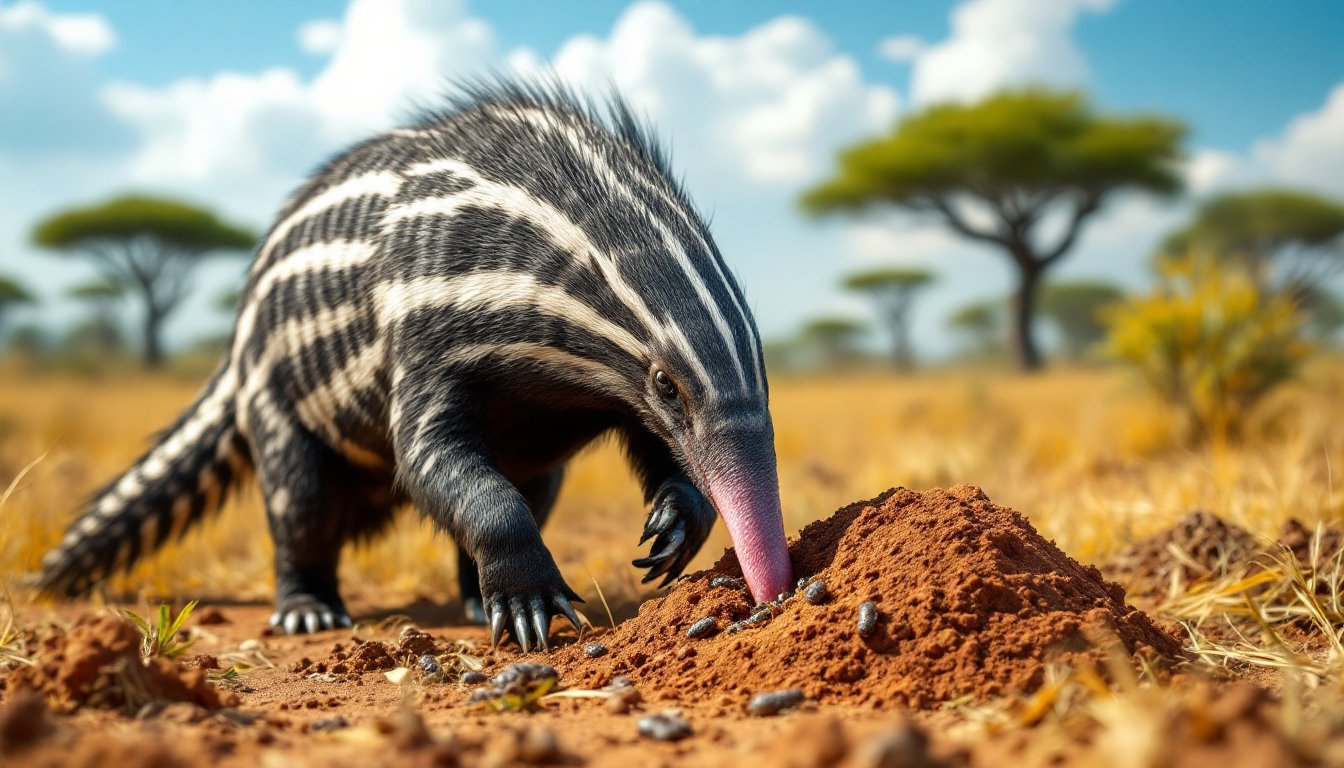

Most homeowners battling an ant invasion reach for chemical sprays or call an exterminator. But there’s a quirky, decidedly low-tech alternative that’s been managing insect populations for millions of years: anteaters. These specialized mammals consume thousands of ants and termites daily in the wild, making them remarkably efficient pest managers. While keeping an anteater in your backyard isn’t practical, or legal in most places, understanding their pest control methods offers valuable lessons for natural insect management. This guide explores how anteaters function as living pest control systems and what homeowners can learn from their approach.
Table of Contents
ToggleKey Takeaways
- Anteater pest control in natural ecosystems eliminates ants and termites without chemicals, consuming 30,000 to 35,000 insects daily through selective targeting that preserves beneficial insects.
- Keeping anteaters for residential pest control is impractical and illegal in most US jurisdictions due to habitat requirements, dietary demands, safety risks, and international conservation protections.
- Homeowners can learn from anteater methods by implementing targeted colony elimination, regular property monitoring, habitat modification to reduce pest conditions, and supporting natural predators.
- Chemical-free alternatives like borax-based baits, diatomaceous earth, and physical barriers replicate the anteater’s effective, sustainable approach to managing pest infestations.
- Professional pest control companies sometimes use ‘anteater’ branding as marketing rather than employing actual anteaters, so verify their actual methods before hiring.
What Is Anteater Pest Control?
Anteater pest control refers to the natural consumption of ants, termites, and other small insects by anteater species. In regions where they’re native, primarily Central and South America, anteaters function as biological control agents, keeping insect colonies in check without chemicals or traps.
Four anteater species exist: the giant anteater, silky anteater, northern tamandua, and southern tamandua. All share a diet consisting almost entirely of ants and termites, with a single adult consuming 30,000 to 35,000 insects daily. They use their powerful front claws to break open insect nests and their elongated tongues, up to two feet long in giant anteaters, to extract prey from deep within colonies.
This isn’t a domestication project for the average homeowner. Anteaters are wild animals with specific habitat needs, strict diets, and legal protections in most jurisdictions. The concept of “anteater pest control” mainly applies to ecological settings where these animals naturally occur, or to conservation efforts that maintain anteater populations as part of ecosystem balance. For residential pest control, the term typically refers to learning from their methods rather than employing actual anteaters.
How Anteaters Control Pest Populations
Anteaters have evolved highly specialized anatomy and behavior patterns that make them extraordinarily efficient insect predators. Understanding these mechanisms reveals why they’re so effective, and why replicating that effectiveness requires different approaches for homeowners.
Their primary hunting tool is a sticky, worm-like tongue covered in thousands of tiny hooks and thick saliva. The tongue can flick in and out 160 times per minute, allowing rapid insect capture. Unlike insectivores that destroy entire colonies, anteaters practice sustainable foraging. They’ll tear open an ant or termite nest, feed for one to three minutes, then move on before soldier insects mount an effective defense. This behavior prevents colony collapse and ensures a future food supply.
Anteaters target the same pests that plague homeowners. Carpenter ants, fire ants, subterranean termites, and drywood termites all fall within their diet. They’re particularly attracted to mature colonies with high worker populations, exactly the infestations that cause structural damage to homes. Their strong sense of smell helps them locate nests hidden inside rotting wood, underground tunnels, or within wall cavities.
The environmental impact is significant. In their native habitats, understanding organic pest control methods shows how predators like anteaters maintain ecological balance by preventing any single insect species from overwhelming an area. This creates healthier forests and grasslands with lower overall pest pressure.
Benefits of Using Anteaters for Natural Pest Management
In ecosystems where anteaters naturally occur, their presence delivers several measurable benefits that chemical pest control can’t match.
Zero chemical residue is the most obvious advantage. Anteaters introduce no pesticides, baits, or toxins into the environment. There’s no risk to groundwater, soil quality, or non-target species like pollinators. For agricultural settings in South America, this makes anteaters valuable allies in organic farming operations.
Selective targeting gives anteaters an edge over broadcast insecticides. They focus on ant and termite colonies while leaving beneficial insects, ladybugs, ground beetles, parasitic wasps, completely untouched. This preserves the natural predator-prey relationships that keep other pest populations in check.
Continuous population control happens automatically. Unlike one-time chemical treatments that kill existing insects but don’t prevent reinfestation, anteaters patrol territories and feed repeatedly. A single giant anteater territory can cover 25 square kilometers, with the animal making regular rounds to different feeding sites.
Cost efficiency in appropriate settings is notable. Farms, nature preserves, and large estates in anteater-native regions benefit from this free pest management service simply by maintaining habitat that supports wild populations. But, as research from Today’s Homeowner frequently notes, most North American homeowners need different strategies since anteaters don’t naturally occur in these ecosystems.
Educational value shouldn’t be underestimated. Studying anteater feeding behavior has influenced modern insect prevention strategies that emphasize targeted colony elimination rather than area-wide pesticide application.
Practical Considerations for Homeowners
Let’s address the question directly: Can homeowners in the United States actually use anteaters for pest control? The short answer is no, and here’s why that matters.
Habitat requirements make anteater keeping impractical for residential properties. Giant anteaters need extensive territories with varied terrain, access to multiple ant and termite colonies, and specific temperature ranges. They’re not apartment-friendly, and they won’t thrive in a suburban backyard. They’re also solitary animals that don’t adapt well to captivity.
Dietary demands pose another barrier. A single anteater requires access to thousands of insects daily. Most residential pest problems involve one or two colonies, nowhere near enough to sustain an anteater. You’d need to continuously import or cultivate insect colonies, which defeats the entire purpose of pest elimination. Anteaters also won’t eat dead insects: they must be alive and moving.
Safety concerns are real. Anteaters possess powerful front claws designed to rip apart termite mounds and defend against predators like jaguars. A giant anteater’s claws can measure four inches long and inflict serious injuries. They’re generally non-aggressive toward humans but can be dangerous if threatened or cornered. They’re not suitable around children or pets.
Zoning and permits vary widely by location, but most municipalities don’t allow exotic wildlife as permanent residents. Even if local ordinances permit it, homeowner insurance policies typically exclude coverage for exotic animal-related damage or injuries.
Legal and Ethical Factors
Before anyone seriously considers anteater ownership, they need to understand the legal framework. All four anteater species face some level of protection under international conservation agreements.
CITES listings (Convention on International Trade in Endangered Species) regulate anteater trade. The giant anteater is listed on Appendix II, meaning international commercial trade requires permits and documentation proving the animal wasn’t taken from the wild illegally. Several states, including California, Georgia, and New York, ban private ownership of anteaters entirely.
USDA permits are required for anyone keeping anteaters for exhibition or educational purposes. This involves facility inspections, veterinary care plans, and detailed record-keeping. Casual pet ownership doesn’t qualify.
Animal welfare standards raise ethical questions. Anteaters have complex behavioral needs that captivity rarely meets. They walk miles daily in the wild, interact with specific ecological niches, and rely on instinctive foraging patterns that domestic environments suppress. Keeping an anteater confined for pest control purposes would likely violate animal cruelty statutes in most jurisdictions, similar to issues covered in commercial pest control ethics.
Professional pest control services sometimes use “anteater” branding for marketing purposes. Anteater Exterminating Inc, for example, is a conventional extermination company that doesn’t employ actual anteaters, it’s just a memorable business name. If you’re researching pest control companies, verify their actual methods rather than assuming the name reflects their approach.
Alternative Natural Pest Control Methods Inspired by Anteaters
Since actual anteaters aren’t practical for most homeowners, what lessons from their behavior can inform realistic pest management strategies?
Targeted colony elimination mimics how anteaters focus on nest sites rather than individual insects. For ant problems, this means locating the colony itself, often by following foraging trails back to entry points, and treating the nest directly with boric acid bait stations or diatomaceous earth. For termites, professional inspection to find colony locations is essential before treatment.
Regular monitoring reflects the anteater’s patrol behavior. Instead of waiting until infestations become severe, inspect your property quarterly for signs of ant or termite activity. Check foundation perimeters, crawl spaces, wooden deck supports, and moisture-prone areas. Early detection prevents the kind of extensive damage that requires major repairs.
Habitat modification addresses root causes. Anteaters succeed because insect colonies are abundant in their environments. Homeowners should do the opposite: eliminate conditions that support pest populations. Fix moisture issues that attract termites to wood, seal cracks in foundations where ants enter, remove wood-to-soil contact around the home’s perimeter, and trim vegetation touching siding that provides pest highways.
Non-toxic physical barriers work on the same principle as an anteater’s selective feeding. Products like diatomaceous earth, copper mesh (for rodent-proofing but also blocks large carpenter ants), and sticky barriers around tree trunks protect specific areas without broad pesticide application.
Beneficial predators can replace anteaters in your local ecosystem. Encourage birds like woodpeckers and nuthatches that feed on carpenter ants and wood-boring beetles. Install bat houses for mosquito control. Maintain ground beetle populations by keeping some leaf litter in garden beds, they prey on ant larvae and other soft-bodied pests. Effective bug problem solutions often involve supporting natural predators rather than eliminating all insects indiscriminately.
Chemical-free baits offer the anteater’s effectiveness with more practicality. Borax-based ant baits, for instance, let worker ants carry poison back to the colony, eliminating the queen and brood, similar to how an anteater targets the nest’s core population. These products are low-toxicity to mammals but highly effective against social insects.
Conclusion
Anteaters demonstrate nature’s approach to pest management: targeted, sustainable, and chemical-free. While they’re not a practical solution for residential properties, their methods inform better pest control strategies. Focus on colony elimination, regular monitoring, and habitat modification. For persistent infestations, consult licensed professionals who can assess whether the issue requires structural repairs or comprehensive pest control approaches beyond DIY methods.