
Discovering signs of pest activity in your home is more than just unsettling, it can compromise structural integrity, contaminate food, and trigger health issues. When prevention tactics fall short and DIY treatments don’t cut it, professional intervention becomes necessary. Witt Pest Control has served homeowners for decades with targeted approaches to eliminate infestations and prevent future problems. Understanding what they offer, how they work, and how to maximize their service can save time, money, and stress when dealing with unwanted invaders in your living space.
Table of Contents
ToggleKey Takeaways
- Witt Pest Control offers comprehensive residential and commercial pest management using Integrated Pest Management (IPM) principles that prioritize prevention through inspection, exclusion, and habitat modification before resorting to chemical treatments.
- Professional Witt Pest Control services create customized treatment plans for common Pittsburgh pests including termites, rodents, bed bugs, ants, and stink bugs, with follow-up visits and warranty coverage included in most plans.
- Proper home preparation—clearing perimeter access, securing pets, and completing pre-treatment tasks—maximizes the effectiveness of Witt Pest Control treatments and protects your belongings during service.
- Pest control costs range from $150–$400 for one-time general treatments to quarterly or annual service plans starting at $100–$150 per visit, with termite treatments averaging $450–$900 depending on foundation perimeter.
- Combining professional Witt Pest Control services with DIY prevention measures like sealing cracks, controlling moisture, maintaining sanitation, and trimming vegetation delivers superior long-term pest protection and reduces emergency service needs.
What Is Witt Pest Control and What Services Do They Offer?
Witt Pest Control operates as a full-service pest management company specializing in residential and commercial applications. Their service portfolio extends beyond basic extermination to include comprehensive inspection, prevention planning, and ongoing monitoring.
Core residential services typically include:
- General pest control for ants, spiders, roaches, and common household invaders
- Termite inspections and treatment using liquid barrier treatments or baiting systems
- Rodent control with trapping, exclusion work, and entry-point sealing
- Bed bug elimination through heat treatments or targeted chemical applications
- Wildlife management for larger pests like raccoons, squirrels, and bats (depending on local licensing)
- Seasonal treatments timed to pest life cycles and regional activity patterns
Many pest control companies, including providers for commercial pest control, offer specialized plans for businesses that require health department compliance and documentation. Witt’s approach integrates Integrated Pest Management (IPM) principles, focusing on long-term prevention through habitat modification, exclusion techniques, and minimal chemical use when possible. This method aligns with modern environmental standards while delivering effective results.
Service plans usually include an initial comprehensive inspection to identify pest species, entry points, conducive conditions, and infestation severity. From there, technicians create a customized treatment protocol rather than applying a one-size-fits-all spray treatment.
Why Choose Witt Pest Control for Your Home?
Selecting a pest control provider requires weighing experience, methodology, licensing, and local reputation. Witt Pest Control distinguishes itself through longevity in the Pittsburgh area and a track record verified through customer feedback on platforms like Angi.
Key advantages include:
- Licensed and insured technicians who maintain state-required certifications for pesticide application
- Customized treatment plans based on property-specific conditions, not generic service packages
- Follow-up visits included in most plans to ensure complete elimination
- Warranty periods that cover re-treatment if pests return within a specified timeframe
- Local knowledge of Pittsburgh’s unique pest pressures, carpenter ants in spring, stink bugs in fall, mice seeking winter shelter
Their inspection reports provide homeowners with valuable documentation for real estate transactions, insurance claims, or pre-purchase assessments. Many mortgage lenders require termite clearance letters before closing, and Witt can provide these official documents when needed.
Proven Methods and Treatment Approaches
Witt employs a tiered treatment strategy starting with non-chemical interventions. This includes identifying and eliminating food sources, sealing cracks with appropriate materials (caulk for gaps under 1/4 inch, copper mesh or expanding foam for larger openings), and removing harborage areas like wood piles or dense vegetation against foundations.
When chemical treatments become necessary, technicians use EPA-registered products applied according to label requirements. For termites, liquid treatments create a continuous barrier in the soil around foundation walls, typically requiring drilling through slabs or treating crawlspace perimeters. Baiting systems offer an alternative that uses monitoring stations to detect activity before introducing slow-acting toxins that termites carry back to the colony.
Rodent control goes beyond setting traps. Effective programs identify every entry point, often where utility lines penetrate walls, gaps around garage doors, or deteriorated foundation vents, and seal them with gnaw-resistant materials like 1/4-inch hardware cloth or sheet metal flashing. Trapping addresses current populations while exclusion prevents reentry.
Common Pests Witt Pest Control Can Eliminate
Pittsburgh’s climate and housing stock create ideal conditions for specific pest species. Understanding what you’re dealing with helps set realistic expectations for treatment timelines and outcomes.
Termites: Both subterranean and drywood species threaten structural wood. Subterranean termites build mud tubes up foundation walls and require soil treatments. Drywood termites infest attic framing and require localized wood treatments or fumigation in severe cases. Treatment success depends on complete coverage, missing even a small gap in the barrier allows colony survival.
Bed bugs: These resilient pests hide in mattress seams, bed frames, baseboards, and electrical outlets. Chemical treatments require multiple visits spaced 10-14 days apart to break the reproduction cycle. Heat treatments offer faster results but require raising room temperatures to 120-135°F for several hours, which demands specialized equipment.
Rodents (mice and rats): House mice can squeeze through openings as small as 1/4 inch, about the diameter of a pencil. Norway rats require larger gaps but cause more damage. Successful elimination requires both trapping the existing population and structural repairs to block reentry. Poison baits carry risks if pets or children access them, so placement requires careful consideration.
Ants: Carpenter ants excavate wood to create nesting galleries, particularly in moisture-damaged framing. Odorous house ants invade kitchens in massive numbers. Treatment effectiveness depends on locating the primary colony, which may be outdoors in a tree stump or under a patio, not just the indoor satellite colonies.
Stink bugs: These seasonal invaders overwinter in wall voids and attics. Fall treatments focus on sealing entry points before populations migrate indoors. Spring treatments address bugs emerging from hibernation. Chemical barriers around windows, doors, and soffits reduce indoor numbers but won’t eliminate all activity.
How to Prepare Your Home for a Witt Pest Control Visit
Proper preparation maximizes treatment effectiveness and protects your belongings. Most services require homeowners to complete specific tasks before technicians arrive.
For general pest control treatments:
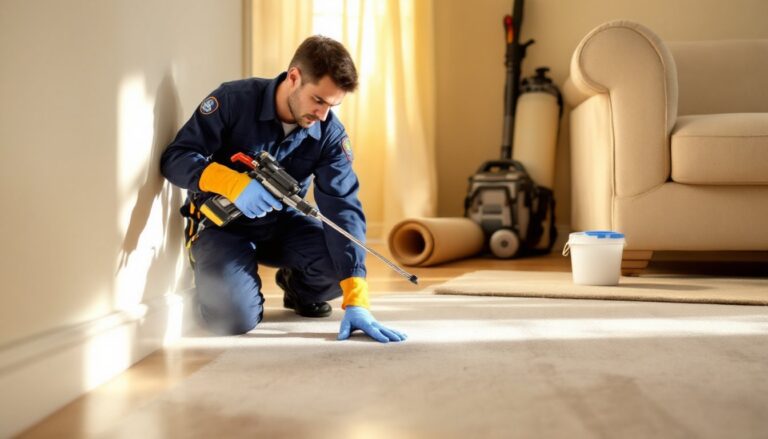
- Clear perimeter access: Move furniture, storage boxes, and items at least 3 feet away from baseboards so technicians can treat along wall edges where pests travel.
- Empty cabinets (if treating kitchen): Remove dishes, food, and cookware from lower cabinets. Cover or remove items from open shelving.
- Cover fish tanks and turn off pumps: Most pesticides are toxic to aquatic life. Cover tanks with plastic sheeting and shut off air pumps during treatment.
- Secure pets and remove pet food/water bowls: Even low-toxicity products can sicken animals if ingested wet. Remove pets for the duration specified by the technician (usually 2-4 hours).
- Mop floors and vacuum carpets: Clean surfaces allow better product adhesion and remove food particles that compete with bait stations.
For termite treatments requiring drilling:
- Clear basement or crawlspace access
- Remove stored items from areas adjacent to foundation walls
- Identify any in-floor heating systems, radiant barriers, or utilities that could be damaged during drilling
For bed bug treatments:
- Wash and dry all bedding, curtains, and clothing on high heat (minimum 120°F for 30 minutes)
- Seal clean items in plastic bags until treatment is complete
- Disassemble bed frames to expose joints and crevices
- Don’t discard mattresses or furniture, this can spread the infestation to other locations
Communicate any health conditions, pregnancies, or respiratory sensitivities to technicians beforehand. They can adjust product selection or scheduling accordingly.
Cost Considerations and Service Plans
Pest control pricing varies based on property size, infestation severity, pest type, and treatment frequency. Getting accurate estimates requires understanding what you’re paying for beyond the initial service visit.
Typical pricing structures include:
- One-time treatments: $150-$400 for general pest control in an average home (1,500-2,500 sq ft). Specialized treatments for bed bugs or termites run higher, often $500-$2,500 depending on scope.
- Quarterly service plans: $100-$150 per visit with initial setup fees. These programs include exterior barrier treatments, interior spot treatments, and seasonal adjustments.
- Annual contracts: Often provide better per-visit value and include guarantees that cover re-treatments at no additional cost if pests return between scheduled visits.
Termite treatments represent a larger investment. Liquid barrier treatments average $3-$6 per linear foot of foundation perimeter. A typical home with 150 linear feet of foundation might cost $450-$900 for treatment. Baiting systems require lower upfront costs ($800-$1,200 for installation) but ongoing monitoring fees of $200-$350 annually.
Factors that increase costs:
- Heavy infestations requiring multiple treatments
- Structural repairs needed to eliminate conducive conditions
- Difficult access requiring specialized equipment or crawlspace work
- Large properties exceeding standard square footage tiers
Many companies, including those listed on platforms like HomeAdvisor, offer free initial inspections. Use these to get written estimates that detail exactly what’s included: number of treatments, coverage areas, product types, and warranty terms. Compare not just price but also scope, a cheap service that doesn’t include follow-up visits often costs more in the long run.
DIY Pest Prevention Tips to Complement Professional Service
Professional treatments work best when combined with ongoing prevention measures homeowners can tackle themselves. These practices reduce pest pressure between service visits and extend treatment effectiveness.
Exclusion and sealing:
- Inspect your foundation annually for cracks wider than 1/16 inch. Fill with polyurethane or silicone caulk rated for exterior use.
- Install door sweeps on all exterior doors. The gap beneath should be no more than 1/4 inch.
- Screen all vents (foundation, attic, dryer) with 1/4-inch hardware cloth secured with corrosion-resistant screws.
- Seal around pipe penetrations, utility entry points, and cable lines with expanding foam or copper mesh.
Moisture control:
- Fix leaking faucets, pipes, and roof damage immediately. Many pests, including carpenter ants and termites, target moisture-damaged wood.
- Improve drainage around foundations. Gutters should extend runoff at least 6 feet from the house.
- Use dehumidifiers in basements and crawlspaces to maintain humidity below 50%.
Sanitation and storage:
- Store firewood at least 20 feet from the house and elevate it 6 inches off the ground on treated lumber or metal racks.
- Keep trash in sealed containers and maintain weekly pickup schedules.
- Clean kitchen surfaces nightly. Crumbs and spills attract ants, roaches, and rodents within hours.
- Store dry goods (flour, cereal, pet food) in sealed plastic or glass containers rather than original packaging.
Landscape management:
- Trim tree branches so they don’t touch the roof or siding, these create highways for ants and squirrels.
- Maintain a 12-inch clearance between mulch and foundation walls. Mulch holds moisture and harbors pests.
- Remove leaf litter, dense groundcover, and debris that provides harborage.
Resources like The Spruce offer seasonal maintenance checklists for pest prevention integrated with general home upkeep. The key is consistency, sporadic efforts won’t deliver the same protection as routine practices built into your home maintenance schedule.
When prevention measures fail and infestations establish, professional intervention becomes necessary. But the homeowner who maintains these habits between service visits gets better long-term results and fewer emergency call-outs.