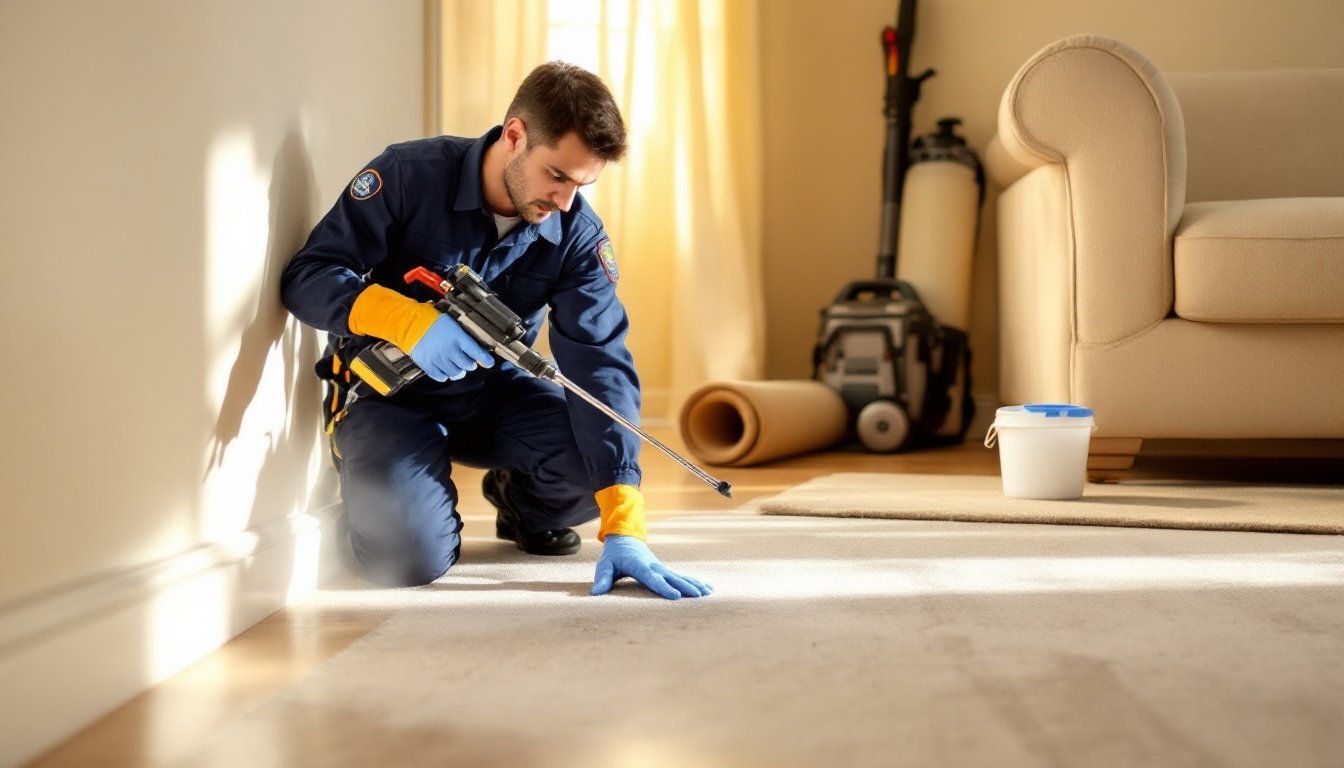

Discovering fleas in your home isn’t just a nuisance, it’s a health concern that requires swift action. These tiny, blood-feeding pests reproduce rapidly, with a single female laying up to 50 eggs daily. Within weeks, a minor flea problem can spiral into a full-blown infestation affecting every room, carpet, and upholstered surface. While store-bought foggers and sprays might knock down adult fleas, they rarely address the larvae and pupae embedded deep in carpet fibers and baseboards. That’s where professional flea exterminators come in, armed with EPA-registered insecticides and proven treatment protocols that target all life stages.
Table of Contents
ToggleKey Takeaways
- Professional flea pest control near me becomes necessary when you spot more than five fleas daily, see bites on humans, or DIY treatments fail after two weeks, as a single female flea can lay up to 50 eggs daily.
- Licensed exterminators use EPA-registered insecticides and multi-treatment protocols (typically 14-21 days apart) to eliminate all flea life stages, including larvae and pupae that consumer products miss.
- Always verify your local flea control provider’s state pesticide applicator license and general liability insurance before hiring, and avoid unlicensed operators who can’t legally purchase professional-grade products.
- Expect to invest $200-$400 for initial professional flea treatment covering 1,500-2,000 square feet, with follow-up visits at $100-$200, significantly more cost-effective than multiple failed DIY attempts.
- Proper preparation—vacuuming 24 hours before treatment, washing pet bedding in 130°F+ water, and removing pets for 4-6 hours—directly determines the success of professional flea pest control services.
- DIY flea control works only for minor, localized infestations (fewer than ten fleas in one area), but fails for widespread home infestations or when household members show flea bite symptoms.
Understanding When You Need Professional Flea Control
Not every flea sighting requires calling an exterminator. A few fleas on your dog after a park visit? That’s manageable with a flea comb and veterinary-recommended topical treatment. But certain situations demand professional intervention.
Call a licensed pest control company when you’re seeing more than five fleas per day even though treating your pets, when flea bites appear on humans (usually around ankles and lower legs), or when you’ve tried over-the-counter treatments for two weeks with no improvement. Professional help is critical in multi-unit dwellings where fleas can migrate through shared walls, and in homes with infants, elderly residents, or individuals with compromised immune systems who face higher risks from flea-borne diseases like murine typhus and flea-borne spotted fever.
Structural issues compound the problem. Fleas thrive in crawl spaces with feral cat activity, beneath raised foundations where wildlife nests, and in homes with wall-to-wall carpeting over concrete slabs that retain moisture. A professional inspection identifies these harborage areas that homeowners typically miss. They’ll check subfloor voids, HVAC ductwork, and even attic spaces if rodents are present, because fleas don’t discriminate between host species.
How to Find Reliable Flea Exterminators in Your Area
Start your search with state-level verification. Every legitimate pest control operator holds a state pesticide applicator license, not optional, legally required. In California, that’s a Structural Pest Control Board license: in Texas, it’s a TDA license. Check your state’s agriculture or environmental department website for license lookup tools. Unlicensed operators can’t legally purchase or apply professional-grade products, and they carry zero insurance if something goes wrong.
Online platforms like Angi and HomeAdvisor aggregate customer reviews and verify contractor licenses, making it easier to compare local options. Filter results by response time (flea problems worsen daily), years in business (newer companies lack treatment track records), and whether they offer free inspections. Most reputable companies provide no-cost assessments before quoting a price.
Ask neighbors who’ve dealt with fleas recently, word-of-mouth referrals often surface companies that don’t advertise heavily but deliver solid results. Veterinary clinics also maintain lists of pest control companies they trust, since they see the aftermath of failed DIY treatments. Avoid door-to-door solicitors and companies that quote prices over the phone without seeing your home. Flea severity varies wildly: ethical exterminators inspect first.
What to Expect During a Professional Flea Treatment
Professional flea control typically involves a two-treatment minimum spaced 14 to 21 days apart. The first visit targets adult fleas and disrupts larval development: the second kills newly emerged adults from pupae that survived the initial treatment (flea cocoons resist most insecticides).
Technicians use truck-mounted or backpack sprayers to apply insect growth regulators (IGRs) like methoprene or pyriproxyfen, which sterilize adult fleas and prevent larvae from maturing. They pair these with adulticides, typically pyrethroids such as bifenthrin or synthetic pyrethrins, that provide quick knockdown. Expect treatment of all floor surfaces, baseboards, furniture undersides, pet bedding areas, and the first three feet of wall surface in severe cases. Outdoor treatment covers porches, decks, crawl space entries, and shaded areas where pets rest.
Reputable companies apply products in strict accordance with the EPA label, the law, not a suggestion. They’ll provide a Safety Data Sheet (SDS) for every chemical used and specify re-entry times, usually two to four hours for most modern formulations. If someone in your home has asthma or chemical sensitivities, discuss organic pest control alternatives like diatomaceous earth applications and heat treatments, though these require more frequent follow-ups.
Preparing Your Home for Flea Extermination
Proper prep work determines treatment success. Start by vacuuming all carpets, rugs, and upholstered furniture 24 hours before the appointment. The vibration stimulates flea pupae to emerge, exposing them to insecticides. Empty vacuum bags or canisters immediately into outdoor trash, flea eggs and larvae survive inside.
Wash all pet bedding, throw rugs, and removable furniture covers in hot water (at least 130°F) and dry on high heat for 30 minutes minimum. Fleas and their eggs can’t survive sustained temperatures above 95°F. Remove pets from the home for the duration specified by the technician (typically four to six hours), and ensure they’ve received veterinary flea treatment within the past 48 hours, untreated pets will reintroduce fleas immediately.
Clear floors of toys, shoes, and clutter so technicians can access baseboards and corners. Move furniture away from walls if possible. If you have an aquarium, cover it with a damp towel and turn off air pumps: most insecticides are toxic to fish even in aerosol form. Don’t mop or shampoo carpets for at least 14 days post-treatment, you’ll remove the residual insecticide needed to kill emerging fleas.
Cost of Professional Flea Pest Control Services
Expect to pay $200 to $400 for an initial treatment covering a typical 1,500 to 2,000 square-foot home, with follow-up visits running $100 to $200 each. Pricing factors include square footage, infestation severity (heavy infestations may require three or more treatments), yard size, and regional labor rates. A Manhattan apartment costs more to treat than a Dallas suburban home due to overhead and licensing costs.
Some companies bundle flea control into quarterly pest service agreements, offering per-visit costs as low as $75 to $125. This makes sense if you live in humid climates like the Southeast where flea season runs year-round, or if you have multiple outdoor pets. One-time treatments work better in arid regions with distinct flea seasons.
Be wary of suspiciously low quotes, under $150 for a whole-home treatment usually means corner-cutting. They might skip the second treatment, use diluted products, or lack proper insurance. Good Housekeeping recommends getting three written estimates that itemize per-visit costs, product names, and warranty terms. Most companies guarantee treatments for 30 days: if fleas return within that window, re-treatment is free. Structural treatments for crawl spaces or subfloor applications add $150 to $300 due to access difficulty and specialized equipment requirements.
Questions to Ask Before Hiring a Flea Control Company
Start with licensing: “Can you provide your state pesticide applicator license number and proof of general liability insurance?” Both should be readily available. Ask what specific products they’ll use, generic answers like “professional-grade chemicals” are red flags. You want product names so you can review EPA labels yourself if you have concerns.
Ask about their treatment protocol: “How many visits are included, and what’s the interval between treatments?” A company promising one-and-done flea elimination is either lying or planning to use illegal concentrations. Inquire about exterior treatment: “Do you treat the yard, and is that included or additional?” Outdoor flea populations reinfest homes constantly in warm months.
Find out about guarantee terms: “What’s your re-treatment policy if fleas return?” Reputable companies offer 30-day warranties minimum. Ask if they require ongoing service contracts or if you can opt for one-time treatment. For businesses facing flea issues in warehouses or retail spaces, commercial pest control providers offer quarterly contracts with faster response times.
Clarify responsibilities: “What prep work do I need to complete before you arrive?” Companies that don’t require any preparation aren’t serious about results. Finally, ask about pet safety: “How long before pets can re-enter treated areas?” This varies by product: modern formulations typically allow re-entry after surfaces dry completely, usually two to four hours.
DIY vs. Professional Flea Control: Making the Right Choice
DIY flea control works for minor, localized problems caught early. If you’ve got fewer than ten fleas over a week and the issue is confined to one pet’s sleeping area, start with veterinary flea treatments, thorough vacuuming, and retail IGR sprays like Precor 2000 Plus. Budget $50 to $100 for products and expect to invest eight to ten hours over two weeks in vacuuming, washing, and treating.
DIY fails when fleas have spread throughout the home, when you have crawl space or subfloor infestations, or when household members are getting bitten regularly. Consumer products contain lower concentrations of active ingredients than professional formulations, 0.05% bifenthrin versus 7.9% in pro-grade products. You also can’t legally purchase the most effective IGRs like nylar without a license.
Professionals bring specialized equipment: truck-mounted sprayers that deliver consistent coverage, crack-and-crevice tools for baseboard voids, and commercial foggers for large open areas. They know how to calculate dilution rates, identify harborage areas, and adjust treatment strategies based on floor type (carpet requires different products than hardwood or tile).
The cost difference narrows when you factor in failed DIY attempts. Homeowners typically spend $150 to $250 on retail products over multiple attempts before calling professionals. If you’re dealing with fleas for the first time, have young children or immunocompromised family members, or own a multi-pet household, skip the DIY phase. The two to three weeks you’ll spend troubleshooting allows the flea population to triple, making professional treatment more expensive and extensive when you finally cave.
That said, DIY plays a role post-treatment. Ongoing vacuuming (minimum three times weekly for a month), regular pet treatments, and yard maintenance prevent reinfestation. Professional treatment clears the existing problem: your maintenance work keeps it from returning.