

Pest infestations aren’t just annoying, they’re a direct threat to your home’s structural integrity, your family’s health, and your peace of mind. Whether you’re dealing with termites chewing through your floor joists, rodents gnawing electrical wiring, or carpenter ants excavating your studs, the question isn’t if you need professional help, but who you should call. Admiral Pest Control has built a reputation in residential pest management by combining thorough inspections, targeted treatments, and preventative strategies that address the root cause rather than just the symptoms. This guide walks through what they offer, why homeowners choose professional services over DIY traps and sprays, and how to prepare your home for effective treatment.
Table of Contents
ToggleKey Takeaways
- Admiral Pest Control provides comprehensive residential services including termite inspections, rodent exclusion, bed bug heat treatments, and quarterly maintenance plans that address root causes rather than symptoms.
- Professional pest control with Admiral or similar providers is more effective than DIY methods because technicians correctly identify pests, access professional-grade products, and understand structural vulnerabilities that enable infestations.
- Expect to pay $100–$300 per quarterly visit for general pest control, $1,200–$2,500 for termite treatments, and $200–$500 for initial rodent control, with costs varying by severity, region, and home size.
- Prepare your home by clearing baseboards, securing pets and food, mowing the lawn, moving firewood away from the foundation, and ensuring technician access to crawl spaces and vents for maximum treatment effectiveness.
- Pest problems often signal underlying structural issues like roof leaks, crawl space moisture, or foundation gaps that require attention from contractors alongside Admiral Pest Control treatments to prevent re-infestation.
- Always request written estimates detailing services, products, warranty terms, and exclusions to avoid hidden fees and ensure transparent pricing before professional pest control work begins.
What Is Admiral Pest Control and What Services Do They Offer?
Admiral Pest Control is a licensed pest management company specializing in residential and light commercial treatments. Their service menu covers the full spectrum of common household invaders: general pest control (ants, spiders, roaches), termite inspections and treatments, rodent exclusion and trapping, bed bug heat treatments, and specialized services like tick and mosquito barrier spraying.
Most providers offer one-time treatments for acute problems and recurring service plans (monthly, bi-monthly, or quarterly) for ongoing prevention. Admiral typically includes an initial inspection, often free or credited toward treatment, where a licensed technician maps high-risk areas, identifies active infestations, and notes conducive conditions like moisture intrusion, wood-to-soil contact, or gaps in foundation walls.
Their termite services often include WDO (Wood-Destroying Organism) inspections required for real estate transactions, along with liquid barrier treatments or bait station systems. For rodents, they don’t just set traps, they identify entry points (gaps around plumbing penetrations, weep holes, roof vents) and recommend exclusion work, which may involve sealing with copper mesh, foam, or sheet metal. If you’re managing both pest issues and broader property concerns, platforms like HomeAdvisor can connect you with general contractors for structural repairs that complement pest control efforts.
Why Homeowners Choose Admiral Pest Control Over DIY Methods
DIY pest control has its place, a can of aerosol foam for a single wasp nest or bait traps for occasional ants can work fine. But most homeowners call professionals after months of failed attempts, wasted money on retail products, and worsening infestations. Here’s why.
Identification matters. That flying ant? Probably a termite swarmer. The droppings in your attic? Could be roof rats, not squirrels. Misidentification leads to wrong treatments. Professionals are trained to spot the difference and know the biology, where pests nest, what they eat, how they reproduce.
Access to professional-grade products. Over-the-counter sprays contain lower concentrations of active ingredients and lack the residual effectiveness of products restricted to licensed applicators. Termiticides like fipronil or imidacloprid, non-repellent sprays for ants, and encapsulation dust for wall voids aren’t sold at big-box stores.
Safety and liability. Applying pesticides incorrectly can contaminate food prep surfaces, harm pets, or create health hazards. Licensed technicians carry insurance, follow label instructions (which are legally binding), and understand PPE requirements, respirators for certain applications, gloves rated for chemical exposure, and eye protection.
Structural expertise. Pest problems often signal bigger issues: roof leaks that promote carpenter ant activity, crawl space moisture feeding subterranean termites, or HVAC duct gaps letting rodents into living spaces. Admiral techs note these conditions in their reports and may recommend you consult a general contractor or waterproofing specialist. Resources like ImproveNet offer project cost guides if you need to budget for foundation repairs or crawl space encapsulation alongside pest treatment.
Common Pests Admiral Pest Control Treats in Residential Homes
Ants: Argentine ants, odorous house ants, carpenter ants, and fire ants (depending on region). Carpenter ants excavate damp wood, look for frass (sawdust-like debris) near baseboards or windowsills. Treatment involves interior and exterior perimeter sprays, baiting, and elimination of moisture sources.
Termites: Subterranean termites enter through cracks in slab foundations or mud tubes on stem walls. Drywood termites infest attic framing and window casings. Treatments range from liquid soil barriers (trenching around the foundation and drilling through slabs) to bait stations monitored quarterly. Some jurisdictions require a termite bond (renewable treatment warranty) for real estate transactions.
Rodents: Norway rats, roof rats, and house mice. Trapping is step one, but exclusion is the long-term fix, sealing gaps wider than ¼ inch (mice can squeeze through openings the diameter of a pencil). Steel wool and caulk won’t cut it: use ½-inch hardware cloth or sheet metal. Roof rats access via overhanging tree branches, so trim them back 3-4 feet from rooflines.
Cockroaches: German roaches breed in kitchens and bathrooms (warm, moist, food access). Oriental and American roaches come from sewers and crawl spaces. Gel baiting in cracks and crevices works better than sprays, which can scatter populations.
Bed bugs: Heat treatments (raising room temperature to 120-135°F for several hours) or chemical applications. Inspect box springs, headboards, electrical outlets, and baseboards, bed bugs hide in cracks thinner than a credit card.
Spiders and occasional invaders: Black widows, brown recluses (region-dependent), silverfish, earwigs, and crickets. Most are nuisance pests but spiders warrant attention if you have young children or allergic individuals.
What to Expect During an Admiral Pest Control Service Visit
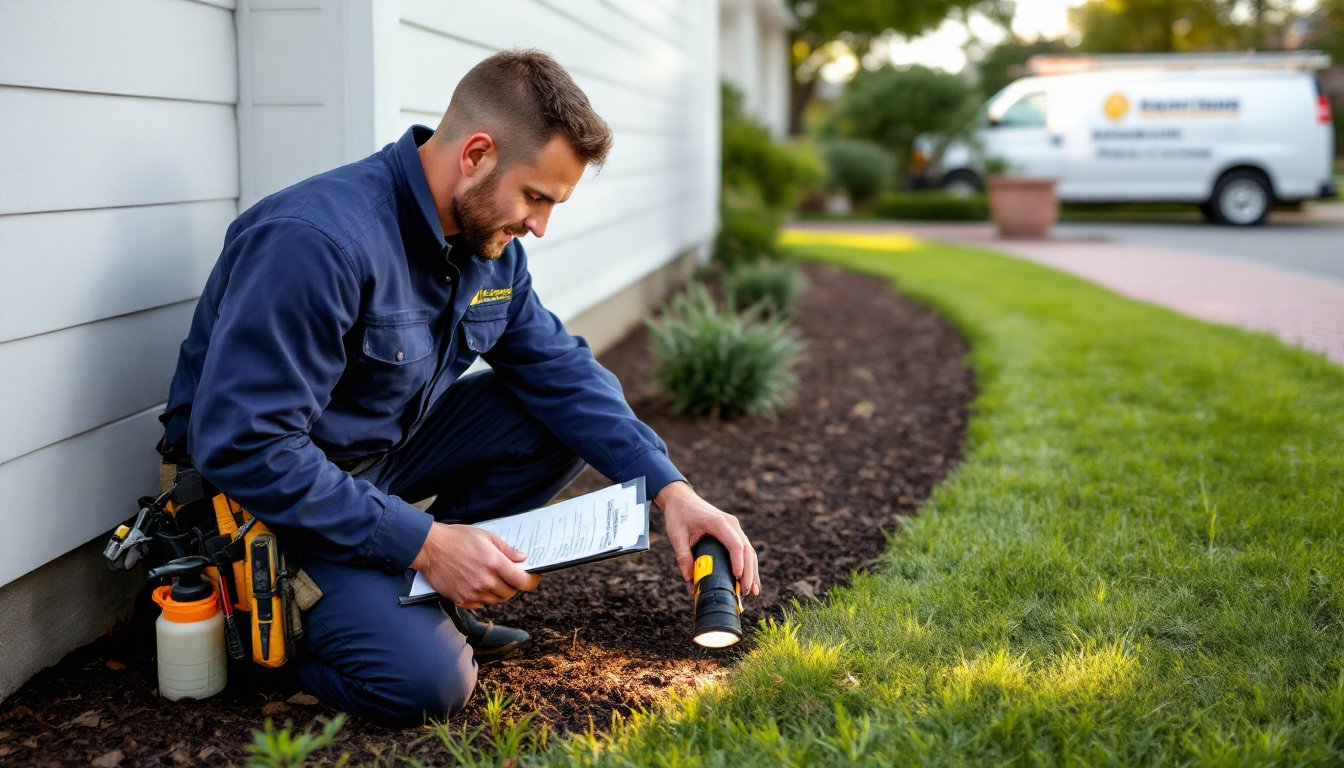
A typical service visit starts with a walkthrough, interior and exterior. The technician checks common entry points: garage door thresholds, weep holes in brick veneer, plumbing penetrations under sinks, attic vents, and foundation cracks. They’ll ask about recent sightings, damage, or strange sounds (scratching in walls, buzzing in voids).
Inspection report: For termites or pre-purchase inspections, expect a written WDO report mapping conducive conditions (wood mulch against siding, poor grading, leaking gutters) and active infestations. These reports are often required by lenders.
Treatment application: Exterior perimeter treatments involve spraying a 3-foot band up the foundation and 6-10 feet out onto the ground or landscaping. Interior treatments target cracks, crevices, and wall voids using crack-and-crevice tips or dust applicators. If you’re dealing with warehouse or office space issues, similar protocols apply, check out options for commercial pest management to understand how treatments scale for larger buildings.
Follow-up schedule: Recurring plans typically include quarterly visits, but heavy infestations may need monthly service initially. Technicians re-inspect bait stations, check traps, and re-apply products as needed. Most companies offer a service guarantee, if pests return between visits, they’ll come back at no charge.
Documentation and safety: Licensed applicators must provide Safety Data Sheets (SDS) for chemicals used and disclose active ingredients. They should mark treated areas if re-entry restrictions apply (rare in modern formulations, but still required for some products).
Cost Considerations and Treatment Plans for Homeowners
Pest control pricing varies widely based on service type, home size, infestation severity, and regional market rates. As of 2026, expect these ballpark ranges (subject to local fluctuations):
- General pest control (quarterly): $100-$300 per visit for a typical single-family home (1,500-2,500 sq ft). Annual contracts often discount per-visit pricing.
- Termite inspections: $75-$150 for a WDO report. Some companies waive the fee if you proceed with treatment.
- Termite treatments: $1,200-$2,500 for liquid barrier treatments (depends on linear feet of foundation and slab penetrations). Bait systems run $1,500-$3,000 for installation plus $300-$500 annual monitoring.
- Rodent control: $200-$500 for initial trapping and exclusion recommendations. Full exclusion (sealing all entry points) can add $500-$2,000 depending on the number of gaps and materials needed.
- Bed bug treatment: $1,000-$2,500 for heat treatment or multi-room chemical applications.
Many providers bundle services, quarterly pest control plus annual termite inspections, for example. Customer feedback on platforms like Angi can give you a sense of pricing transparency and service quality in specific markets.
Factors that affect cost:
- Severity: Heavy German roach infestations or active termite damage require more product, labor, and follow-up.
- Access: Crawl spaces with limited clearance, tile roofs requiring careful foot placement, or multi-story homes increase labor time.
- Geographic region: High cost-of-living areas (coastal California, Northeast metros) run 30-50% higher than rural Midwest or Southeast.
Always get a written estimate detailing services, products, warranty terms, and exclusions. Watch for hidden fees (fuel surcharges, re-treatment fees, or charges for “extra” pests not covered in the base plan).
How to Prepare Your Home for Professional Pest Control Treatment
Proper prep maximizes treatment effectiveness and keeps your household safe. Here’s what to do before the technician arrives.
Interior prep:
- Clear perimeter zones. Pull furniture, storage bins, and appliances 6-12 inches away from baseboards so the technician can access wall/floor junctions.
- Empty cabinets (if treating for roaches or ants). Remove food, dishes, and cookware from base cabinets and under-sink areas. Store in sealed containers or cover with towels.
- Vacuum thoroughly. Remove crumbs, pet hair, and debris, pesticides work best on clean surfaces. Empty the vacuum canister or bag immediately into an outdoor trash bin.
- Cover or remove pet dishes, toys, and bedding. Even low-toxicity products shouldn’t contact items pets lick or chew.
- Secure aquariums. Turn off pumps and cover tanks with towels if treating nearby.
Exterior prep:
- Mow lawn and trim vegetation. Overgrown grass and shrubs touching the foundation reduce treatment effectiveness and provide pest harborage.
- Move firewood, mulch, and debris. Store firewood 20 feet from the house, elevated on a rack. Pull mulch back 6 inches from the foundation.
- Clear access to crawl space vents, electrical panels, and spigots. Technicians need unobstructed access.
- Note irrigation schedules. Let the technician know if sprinklers will run, exterior treatments need 24-48 hours to dry and bond to surfaces.
Safety during and after treatment:
- Ventilate treated areas. Open windows for 15-30 minutes if interior spraying occurred.
- Keep kids and pets off treated surfaces until dry (usually 1-2 hours). For floor treatments, wait until surfaces are completely dry to the touch.
- Don’t mop or wipe treated baseboards for at least a week, residual products need time to work.
- Wear gloves when handling bait stations or traps if you’re moving them for cleaning.
If you’re addressing pest-related damage or structural conditions (rotted sills, moisture in crawl spaces, gaps around foundation bolts), tackle those repairs promptly to prevent re-infestation. Your pest control tech can’t fix a leaking hose bib or re-grade your yard, but they’ll document those issues so you can prioritize the work.
Conclusion
Professional pest control isn’t just about spraying chemicals, it’s about understanding pest biology, identifying structural vulnerabilities, and implementing integrated solutions that protect your home long-term. Admiral Pest Control and similar providers bring the expertise, equipment, and licensed products that DIY methods can’t match. By preparing your home properly, understanding what treatments involve, and budgeting for both immediate and preventative services, you’re taking the same methodical approach you’d bring to any serious home improvement project: the right tools, the right knowledge, and a plan that lasts.


