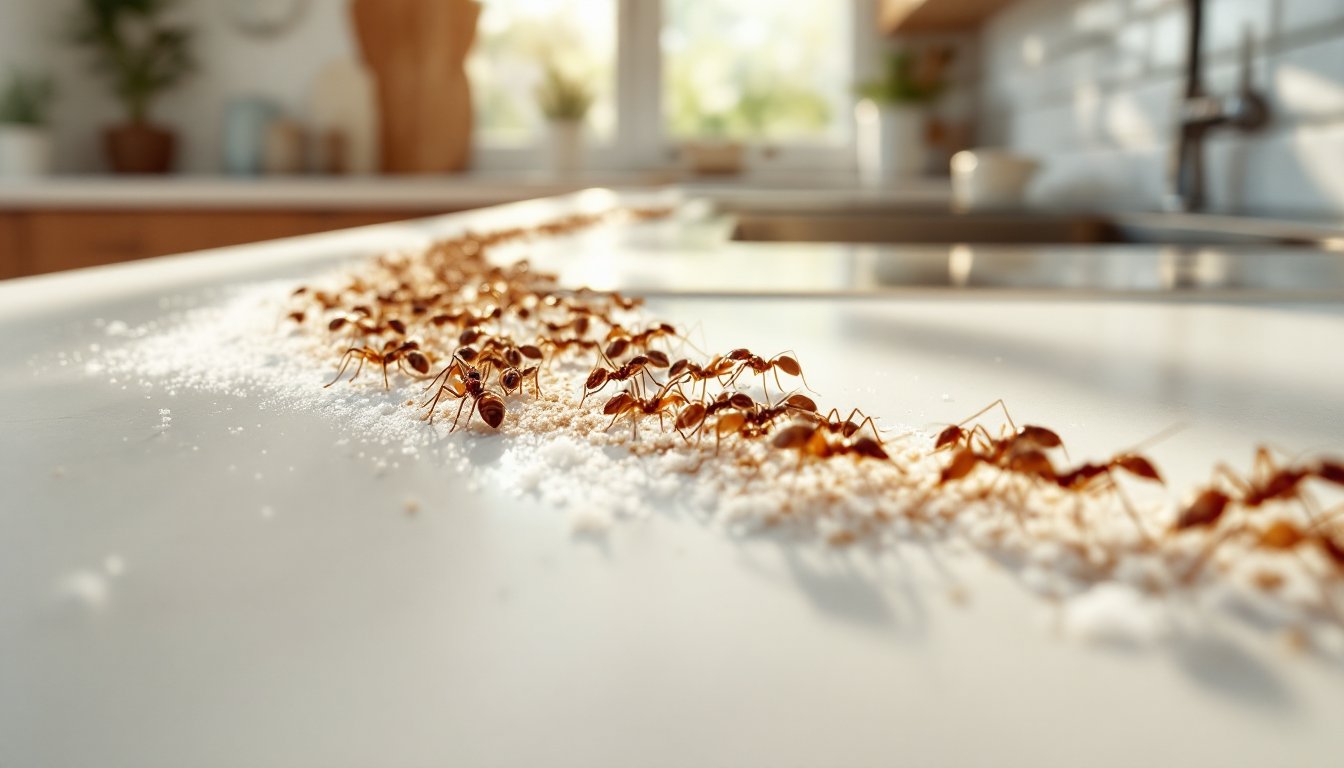

Ants are relentless. One day your kitchen counter is spotless, the next morning you’ve got a black highway of insects trailing from a baseboard crack to your sugar bowl. Melbourne’s warm, humid climate makes it prime real estate for ant colonies, and once they find a food source inside, they’re not leaving without a fight. Unlike cockroaches or rodents that hide, ants broadcast their presence, thousands of workers marching in formation, advertising that your home has been compromised. This guide walks homeowners through the identification, treatment, and prevention of ant infestations in Melbourne, covering DIY remedies and the point where you’ll want to bring in a licensed exterminator.
Table of Contents
ToggleKey Takeaways
- Ant pest control Melbourne starts with identifying the species—coastal brown, black house, and Argentine ants respond differently to baits, so accurate identification ensures effective treatment.
- Ant baits are the gold standard for DIY control, requiring 2-4 weeks of patience as worker ants carry poison back to the colony; rotation between formulations improves results if ants ignore one bait.
- Seal entry points like gaps around windows, doors, cracks in foundations, and utility penetrations, combined with eliminating food and water sources, prevents future ant infestations.
- Carpenter ants and persistent infestations after 4-6 weeks of DIY treatment require a licensed Melbourne pest controller with specialized equipment, non-repellent sprays, and structural damage assessment.
- Melbourne’s warm, humid subtropical climate creates ideal conditions for rapid ant colony expansion, making year-round prevention through outdoor perimeter maintenance and annual property inspections essential.
Why Ants Invade Melbourne Homes
Ants don’t invade for the thrill of it, they’re hunting resources. Melbourne’s subtropical climate means mild winters and wet summers, conditions that push ant colonies to expand rapidly. When outdoor food sources dry up or heavy rain floods nests, scouts venture indoors searching for moisture, sugar, protein, and shelter.
Common entry points include gaps around windows and doors, cracks in foundation slabs, weep holes in brick veneer walls, and utility penetrations (plumbing, electrical conduit). Even a 1-2mm gap is enough for most ant species. Older Melbourne homes with timber frames and weatherboard siding often have dozens of unnoticed entry routes.
Inside, ants are drawn to:
- Moisture: Leaky pipes under sinks, condensation on HVAC ducts, or poorly sealed bathrooms.
- Food residue: Grease splatters behind stoves, crumbs in pantries, pet food bowls left out overnight, and compost bins stored indoors.
- Nesting sites: Wall cavities with water damage, gaps behind kitchen kickboards, and insulation voids.
Melbourne’s housing stock, a mix of Victorian-era terraces, post-war brick-and-tile, and modern slab-on-ground builds, all have vulnerabilities. Slab homes often see ants trailing along expansion joints, while older timber homes may have colonies nesting directly inside wall cavities.
Common Ant Species in Melbourne and How to Identify Them
Not all ants respond to the same treatments. Identifying the species helps you pick the right bait or barrier treatment.
Coastal brown ant (Pheidole megacephala): The most common indoor pest in Melbourne. Workers are 2-3mm long, light brown, with a large-headed soldier caste. They nest outdoors but forage indoors for sweets and proteins. Trails can number in the thousands.
Black house ant (Ochetellus glaber): Tiny (2mm), shiny black workers that smell like rotten coconut when crushed. They prefer sugary foods and nest in wall cavities, under pavers, or inside potted plants brought indoors.
Argentine ant (Linepithema humile): Light to dark brown, 2-3mm, and infamous for forming mega-colonies spanning multiple properties. They displace native species and are resistant to many DIY baits. Often found in garden beds and entering homes via door thresholds.
Carpenter ant (*Camponotus spp.): Large (6-12mm), black or reddish-black ants that excavate timber to nest, not to eat it. If you see coarse sawdust (frass) below window sills, door frames, or roof eaves, you’ve got structural damage underway. This is a professional-level problem.
Bulldog ant (*Myrmecia spp.): Aggressive, 10-20mm, with powerful mandibles and a painful sting. Rare indoors but common in Melbourne gardens. If these are nesting near your entry points, removal requires caution, these ants will attack if disturbed.
Identify ants by collecting a few workers in a clear jar (use a damp cotton ball to keep them alive) and comparing size, color, and behavior. Coastal brown ants move fast and scatter when disturbed: carpenter ants are slower and more deliberate.
DIY Ant Control Methods That Actually Work
Most ant problems can be managed with the right combination of baits, barriers, and sanitation. The key is patience, ant colonies have thousands of workers and multiple queens, so elimination takes weeks, not hours.
Ant baits are the gold standard for DIY control. Worker ants carry poisoned bait back to the nest, killing the queen and brood. Use gel baits (easy to apply in cracks), granular baits (for outdoor perimeters), or bait stations (enclosed, safe around pets).
- Placement: Put baits along active trails, near entry points, and in areas where you’ve seen scouts. Don’t spray insecticide near baits, it repels ants before they can feed.
- Rotation: If ants ignore a bait after 24-48 hours, switch formulations. Coastal brown ants often prefer protein-based baits (borax mixed with peanut butter), while black house ants favor sugar-based gels.
- Timeframe: Expect 2-4 weeks for colony collapse. Don’t panic if trails increase initially, more workers are feeding on the bait.
Barrier sprays using pyrethroids (permethrin, bifenthrin) create a residual barrier around doors, windows, and foundation perimeters. These kill ants on contact but won’t eliminate the colony. Reapply every 4-6 weeks or after heavy rain.
Dust insecticides (diatomaceous earth, silica gel) work in wall voids, subfloors, and roof spaces where ants nest. Drill small access holes into wall cavities, puff dust inside with a hand duster, and seal holes with filler. Wear a P2 dust mask, silica dust is a respiratory hazard.
Natural Remedies for Ant Prevention
Natural methods won’t eliminate established colonies, but they’re effective for deterring scouts and preventing reinfestations.
Vinegar solution: Mix 1 part white vinegar to 1 part water and spray along trails and entry points. Vinegar disrupts scent trails, confusing foragers. Reapply daily until activity stops.
Boric acid and sugar bait: Combine 1 teaspoon boric acid, 3 tablespoons sugar, and 2 tablespoons water to form a paste. Smear small amounts on cardboard near trails. Ants consume it and share it with the colony. Keep away from pets and children.
Cinnamon or peppermint oil: Apply undiluted oil to cotton balls and place near entry points. The strong scent repels ants but won’t kill them. This is a short-term deterrent, not a solution.
Diatomaceous earth (food-grade): Dust around door thresholds, window sills, and cracks. The microscopic edges damage ant exoskeletons, causing dehydration. Effective in dry areas but useless if it gets wet.
Natural remedies are most useful when paired with robust bug problem solutions that address entry points and sanitation gaps.
When to Call a Professional Ant Exterminator in Melbourne
Some ant problems exceed DIY capacity. Here’s when to hire a licensed pest controller:
Carpenter ants: If you’ve identified carpenter ants or found frass (sawdust piles), you’re dealing with structural damage. Professionals use thermal imaging to locate nest cavities, drill and treat voids, and assess timber integrity. Delaying treatment risks compromising roof trusses, window frames, or floor joists.
Persistent infestations: If you’ve baited, sprayed, and sealed for 4-6 weeks without reducing ant activity, the colony may be too large or inaccessible. Pros have access to non-repellent sprays (fipronil, indoxacarb) that ants can’t detect, ensuring they carry poison back to hidden nests.
Multiple entry points or unknown nest location: Ant colonies nesting inside wall cavities, under slab foundations, or in subfloor voids require dust treatments and void injections that need specialized equipment. A licensed exterminator can legally apply restricted-use products and knows building codes about drilling into structural elements.
Argentine ant mega-colonies: These ants form interconnected nests across multiple properties. Treating your home alone won’t stop reinfestation. Coordinate with neighbors and hire a pest company that offers commercial pest control solutions to treat the entire block.
Health or safety concerns: If someone in the household is allergic to insect stings (bulldog ants) or if you’re uncomfortable handling pesticides, outsource the job. Professionals carry public liability insurance and follow Australian Pesticides and Veterinary Medicines Authority (APVMA) guidelines.
When hiring, verify the contractor holds a Commercial Pest Control License in Victoria and ask for a written treatment plan, including products used, application methods, and estimated timeframes. Many Melbourne pest controllers offer warranties, typically 3-6 months, covering retreatment if ants return.
Preventing Future Ant Infestations in Your Melbourne Home
Once you’ve cleared an infestation, prevention is all about denying ants the three things they need: food, water, and access.
Seal entry points:
- Caulk gaps around windows, doors, and utility penetrations with exterior-grade silicone or polyurethane sealant.
- Install door sweeps on all exterior doors. Even a 5mm gap under a door is an open invitation.
- Repair damaged fly screens and weep hole guards. Weep holes need ventilation but can be fitted with stainless steel mesh inserts to block ants.
- Check for cracks in concrete slabs, especially around expansion joints and plumbing risers. Fill with epoxy crack filler or polyurethane foam.
Eliminate food and water sources:
- Wipe counters, sweep floors, and vacuum crumbs daily. Pay attention to under appliances (toasters, microwaves) where grease accumulates.
- Store dry goods (flour, sugar, cereal) in airtight glass or hard plastic containers. Ants can chew through cardboard and thin plastic bags.
- Don’t leave pet food out overnight. Wash bowls immediately after feeding.
- Fix leaking taps, pipe joints, and HVAC condensate drains. Even a slow drip provides enough moisture for a colony.
- Empty kitchen bins nightly and rinse recyclables before storing.
Outdoor perimeter maintenance:
- Trim vegetation so it doesn’t touch walls or overhang rooflines. Branches act as highways for ants to bypass ground-level barriers.
- Move mulch, firewood, and compost bins at least 1 meter away from the house. These harbor nesting colonies.
- Clean gutters regularly. Overflowing gutters saturate eaves, creating ideal nesting conditions.
- Apply a granular ant bait around the foundation perimeter every 3-4 months as a preventive measure.
Many homeowners exploring organic pest control methods find that combining natural deterrents with rigorous sanitation keeps ant numbers manageable without constant pesticide use.
Annual inspections: Walk your property twice a year (spring and autumn) looking for ant trails, nests in garden beds, or signs of timber damage. Early detection prevents small problems from becoming infestations.
Conclusion
Ant control in Melbourne isn’t about one-off treatments, it’s about understanding the species, eliminating colonies at the source, and maintaining defenses year-round. DIY baits and barriers handle most infestations, but structural damage or persistent mega-colonies require a licensed pro. Start with sanitation and sealing, bait aggressively, and don’t hesitate to call in backup when the problem exceeds your toolkit.