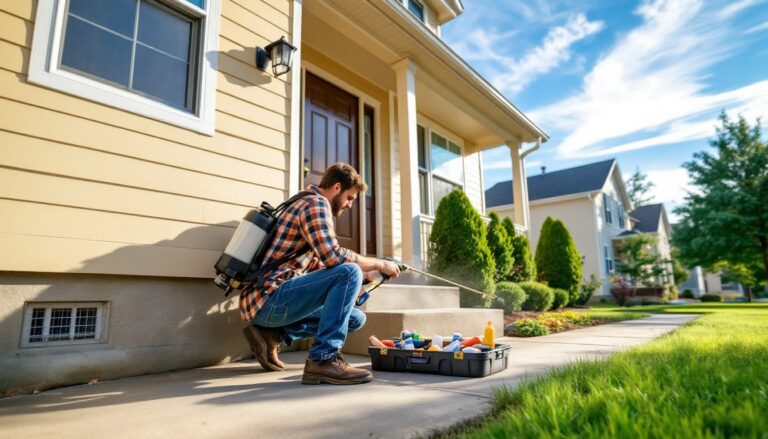

Beetles aren’t just the outdoor critters munching on your garden leaves. When they move indoors, they can ruin carpets, damage structural wood, and contaminate stored goods. Unlike termites or carpenter ants, beetle infestations often go unnoticed until the damage is well underway. Homeowners may spot tiny holes in hardwood floors, find shed larvae skins in closets, or notice fabric damage before they realize beetles are the culprit. This guide breaks down how to identify the most common household beetles, recognize the warning signs, tackle an infestation with effective DIY methods, and know when it’s time to bring in a professional.
Table of Contents
ToggleKey Takeaways
- Carpet beetles and powderpost beetles are the most destructive household pests, requiring distinct control strategies—larvae damage fabrics while powderpost beetles bore through wood structures.
- Early detection of beetle infestations is critical, look for signs like round exit holes, fine sawdust (frass), shed larval skins, and fabric damage before widespread damage occurs.
- DIY beetle pest control methods including aggressive vacuuming, laundering fabrics at 120°F, borate treatments, and moisture reduction work effectively for localized infestations caught early.
- Professional pest control is necessary for structural wood damage, repeated infestations, or large-scale treatments, with fumigation costs averaging $1,200 to $2,500 for an average home.
- Prevention through moisture control, regular cleaning, sealing entry points, and inspecting secondhand items is the most cost-effective way to avoid beetle pest control problems.
- Monitor vulnerable areas every few months using a flashlight and magnifying glass to catch beetle activity early before larvae cause significant structural or fabric damage.
Understanding Common Beetle Pests in Your Home
Not all beetles pose a threat indoors, but a few species have earned their reputation as serious household pests. The two most common offenders, carpet beetles and powderpost beetles, cause very different types of damage and require distinct control strategies.
Carpet Beetles
Carpet beetles (family Dermestidae) are small, oval insects typically 1/16 to 1/8 inch long. Adults are often black with mottled patterns of white, brown, or yellow scales. They’re attracted to light and may appear on windowsills during spring. The real damage comes from their larvae, fuzzy, torpedo-shaped grubs covered in bristly hairs that feed on natural fibers, pet hair, dead insects, and stored food products.
Larvae can destroy wool rugs, silk curtains, upholstered furniture, and even taxidermy mounts. They prefer dark, undisturbed areas like closets, baseboards, and beneath furniture. You’ll often find cast-off larval skins before you spot the insects themselves. Adult carpet beetles feed on pollen outdoors and are harmless, but they lay eggs inside your home, perpetuating the cycle.
Wear gloves when handling infested materials, some people develop skin irritation from contact with larval hairs.
Powderpost Beetles
Powderpost beetles (families Lyctidae, Anobiidae, and Bostrichidae) target wood. Adults are reddish-brown to black, ranging from 1/8 to 3/4 inch long. Their larvae bore through hardwoods, leaving behind fine, powdery frass (sawdust) that gives them their name. Exit holes are small, typically 1/32 to 1/8 inch in diameter, and perfectly round.
These beetles infest finished wood products: flooring, furniture, molding, and structural timbers. They prefer wood with high starch content and moisture levels between 6% and 30%. Lyctid powderpost beetles favor hardwoods like oak, ash, and hickory. Anobiid beetles (also called deathwatch beetles) attack both hardwoods and softwoods, often in crawl spaces and attics where moisture is higher.
Structural infestations may compromise load-bearing members over time. If you’re finding frass piles beneath joists or beams, consult a structural engineer or pest professional before assuming it’s purely cosmetic.
Signs of a Beetle Infestation
Beetle infestations are sneaky. By the time you notice damage, larvae have often been feeding for months. Here’s what to look for:
• Round exit holes in wood: Powderpost beetles leave 1/32 to 1/8 inch holes when adults emerge. Fresh holes have clean, sharp edges and may have frass nearby.
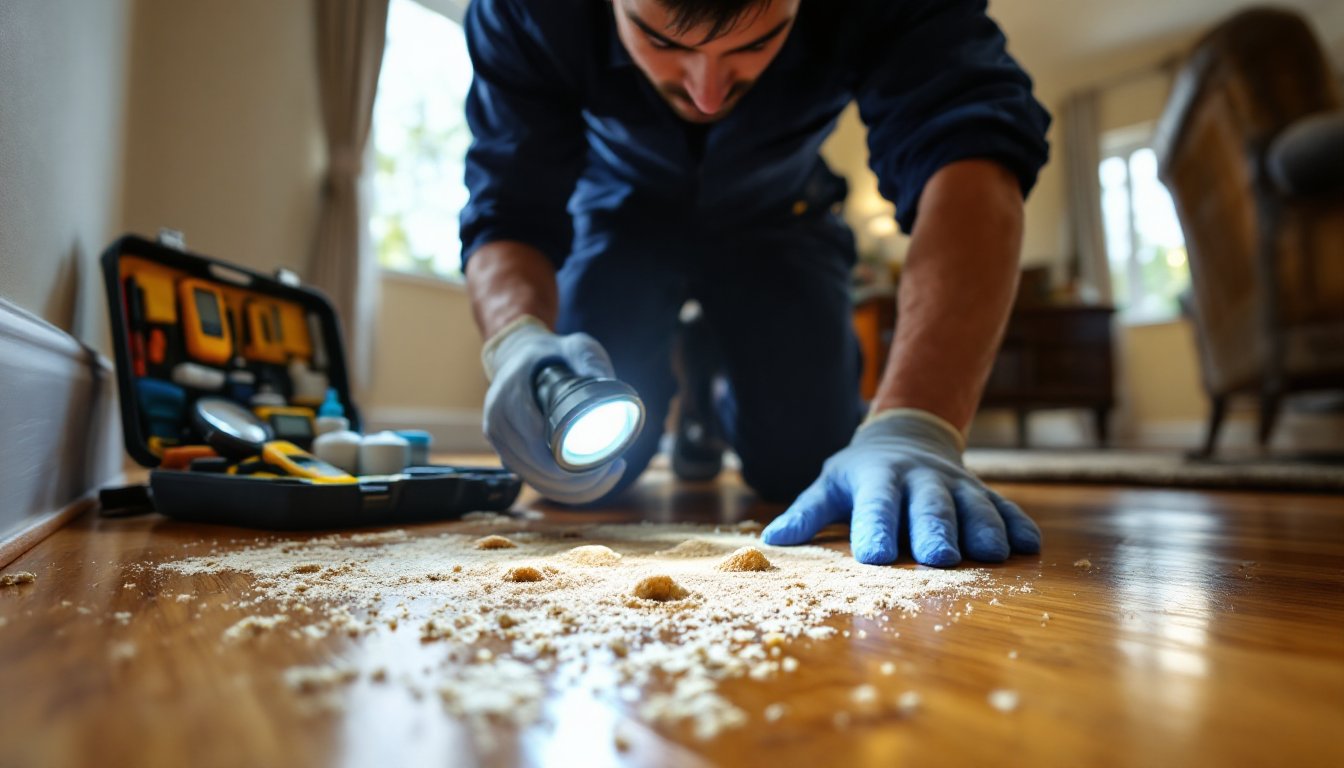
• Fine, powdery sawdust: Frass beneath or around wood surfaces indicates active boring. It feels like flour or fine talcum powder.
• Shed larval skins: Carpet beetle larvae molt several times. You’ll find brown, bristly casings in corners, along baseboards, or under furniture.
• Fabric damage: Irregular holes in wool, silk, or fur items, especially in dark storage areas. Damage often appears in patches rather than uniform holes.
• Live or dead adult beetles: Spotting adults on windowsills, light fixtures, or crawling on walls, particularly in spring or early summer.
• Larvae: Carpet beetle larvae look like tiny, fuzzy caterpillars. Powderpost beetle larvae stay hidden inside wood and are rarely seen.
Inspect high-risk areas regularly: attics, crawl spaces, closets, beneath area rugs, and around stored textiles. Use a flashlight and magnifying glass for close examination. Tap suspected wood with a screwdriver handle, hollow sounds or wood that crumbles easily may indicate internal damage.
DIY Beetle Control Methods That Actually Work
For localized infestations caught early, homeowners can often eliminate beetles without professional help. Success depends on thorough inspection, targeted treatment, and consistent follow-up.
For Carpet Beetles:
- Vacuum aggressively: Use a vacuum with a HEPA filter and a crevice tool. Hit baseboards, carpet edges, under furniture, closet floors, and air vents. Dispose of the vacuum bag immediately in an outdoor trash bin.
- Launder or dry-clean fabrics: Wash infested textiles in hot water (at least 120°F) or dry-clean items that can’t be washed. Heat kills all life stages.
- Freeze small items: Place infested materials in sealed plastic bags and freeze for at least 72 hours at 0°F or lower.
- Apply boric acid: Dust a thin layer of food-grade boric acid in cracks, crevices, and beneath baseboards. Wear a dust mask during application. Boric acid is a desiccant that damages insect exoskeletons.
- Use pheromone traps: Sticky traps with carpet beetle pheromones help monitor adult activity and reduce reproduction. Place them in closets and along walls.
- Remove nesting materials: Check for bird nests, wasp nests, or dead rodents in attics or wall voids. Carpet beetles feed on these protein sources.
Homeowners dealing with persistent carpet beetle problems can explore organic pest control options that minimize chemical exposure indoors.
For Powderpost Beetles:
- Remove and replace infested wood: If damage is localized to one piece of furniture or trim, removing it may solve the problem. Seal the wood in plastic and dispose of it properly.
- Apply borate wood treatments: Products containing disodium octaborate tetrahydrate (DOT) penetrate wood and kill larvae on contact. Brush or spray onto raw or unfinished wood. Borate treatments won’t work on sealed or painted surfaces.
- Improve ventilation and reduce moisture: Use a dehumidifier in crawl spaces and basements to keep wood moisture below 20%. Powderpost beetles won’t infest wood that’s too dry.
- Seal and paint wood surfaces: Once an infestation is controlled, seal exit holes with wood filler and apply primer and paint or varnish. This prevents re-infestation and makes future monitoring easier.
- Heat treatment (small items): Expose infested furniture to 120°F for several hours in a kiln or sealed chamber. This kills all life stages but requires specialized equipment.
For widespread structural damage or active infestations in flooring or framing, DIY methods often fall short. Many bug problem solutions require professional-grade equipment and expertise.
When to Call a Professional Exterminator
Some beetle infestations exceed DIY capabilities. Here’s when to hire a licensed pest control operator:
• Structural wood damage: If powderpost beetles have compromised joists, beams, or subflooring, a professional should assess the extent and treat hard-to-reach areas.
• Repeated infestations: If beetles return after multiple DIY attempts, the source may be hidden or the infestation more widespread than visible evidence suggests.
• Large-scale treatment needs: Whole-structure fumigation or heat treatment requires specialized equipment, permits, and safety protocols.
• Uncertain identification: If you can’t confidently identify the pest, a professional can diagnose the problem and recommend appropriate treatment.
• Health or safety concerns: Homeowners with respiratory issues, young children, or pets may prefer professional application of pesticides to minimize exposure risks.
Professionals use tools like borescopes to inspect inside walls, moisture meters to find conducive conditions, and registered pesticides not available to consumers. Fumigation with sulfuryl fluoride (Vikane) is one of the few methods that reaches beetles deep inside wood without surface application. This requires vacating the structure for 24-72 hours and costs vary widely by region and structure size, expect $1,200 to $2,500 for an average single-family home, though prices fluctuate based on local market conditions and infestation severity.
For businesses facing beetle issues, commercial pest control services offer tailored solutions that minimize downtime and protect inventory.
Preventing Future Beetle Problems
Prevention is cheaper and easier than treatment. A few proactive steps keep beetles from establishing a foothold.
General Prevention:
• Seal entry points: Caulk cracks around windows, doors, utility penetrations, and foundation gaps. Repair damaged window screens.
• Remove outdoor nesting sites: Clear bird nests, wasp nests, and dead vegetation from eaves, attics, and vents. These attract carpet beetles.
• Inspect secondhand items: Check used furniture, rugs, and lumber for exit holes, frass, or larvae before bringing them inside.
• Control indoor humidity: Maintain relative humidity below 50% using dehumidifiers. This discourages powderpost beetles and other moisture-loving pests.
• Store textiles properly: Use airtight plastic bins for wool, silk, and fur items. Add cedar blocks or lavender sachets, while not pesticides, they repel some carpet beetles.
• Regular cleaning: Vacuum frequently, especially in low-traffic areas. Carpet beetle larvae thrive on lint, pet hair, and food crumbs.
• Inspect firewood: Store firewood at least 20 feet from the house and never bring it inside until you’re ready to burn it. Powderpost beetles often hitch a ride on infested logs.
For New Construction or Renovations:
• Treat lumber with borate-based preservatives before installation, particularly in crawl spaces and attics.
• Use kiln-dried lumber with moisture content below 15%. Most powderpost beetles won’t infest properly dried wood.
• Install vapor barriers in crawl spaces to control ground moisture.
Monitoring is key. Set a calendar reminder to inspect vulnerable areas every few months. Catching an infestation early, when it’s just a few larvae, saves time, money, and structural integrity. For comprehensive strategies, many homeowners consult additional pest control resources that cover prevention and treatment across multiple pest types.
Final Thoughts
Beetle infestations can feel overwhelming, but they’re manageable with the right approach. Identify the pest, understand its lifecycle, and apply targeted control methods. DIY treatments work well for localized problems, but don’t hesitate to call a professional for structural issues or persistent infestations. Prevention, through moisture control, regular cleaning, and vigilant inspection, remains the best long-term defense. Beetles may be small, but catching them early keeps them from causing big problems.