
Pests don’t wait for an invitation, and when they show up, they bring damage, health risks, and stress along for the ride. Turner’s Pest Control has been a go-to solution for homeowners across the Southeast dealing with everything from subterranean termites eating away at floor joists to roof rats nesting in attics. Founded in 1971 and operating across multiple states, Turner’s offers both reactive treatments and preventative programs tailored to regional pest pressures. Whether you’re buying a home and need a termite inspection before closing or dealing with an active infestation, understanding what Turner’s brings to the table, and what it’ll cost, helps you make an informed call on protecting your investment.
Table of Contents
ToggleKey Takeaways
- Turner’s Pest Control provides comprehensive termite inspections and treatment solutions using Integrated Pest Management (IPM) methods across the Southeast, combining chemical treatments, exclusion work, and monitoring for long-term prevention.
- Rodent control with Turner’s starts with identifying entry points and exclusion work using copper mesh or mechanical barriers, followed by multiple service visits to confirm elimination and prevent re-entry.
- Turner’s service agreements offer quarterly or monthly visits starting at $50–$100 per visit for general pest control, with termite treatments ranging from $800–$2,500 depending on method and home size.
- Local branch access through Turner’s Pest Control enables faster response times and technicians with regional pest expertise, particularly valuable for species-specific threats like Formosan termites and fire ants.
- Homeowners should verify warranty terms, cancellation policies, and request Safety Data Sheets before treatment, as some warranties cover only re-treatment while others include damage repair up to a capped amount.
- Bundling services, paying annually upfront, and comparing written quotes across service inclusions rather than price alone can reduce pest control costs by 10–15% and ensure comprehensive coverage.
What Is Turner’s Pest Control?
Turner’s Pest Control is a family-owned pest management company operating primarily in Florida, Georgia, Alabama, and South Carolina. With over five decades in business, they handle residential and commercial accounts through a network of branch offices staffed by state-licensed technicians.
Their service model focuses on Integrated Pest Management (IPM), which combines chemical treatments, exclusion work, habitat modification, and monitoring rather than relying solely on pesticide application. This approach aligns with modern pest control standards that prioritize long-term prevention over reactive spraying.
Turner’s technicians undergo training in species identification, application safety, and state-specific regulations. They’re required to carry credentials that comply with each state’s Department of Agriculture or equivalent regulatory body, which oversees pesticide use and licensing.
The company handles both one-time treatments (like pre-purchase termite inspections) and recurring service agreements that include quarterly or monthly visits depending on pest pressure and property type. Accounts are managed through local branches, so response times and service consistency can vary by region.
Services Offered by Turner’s Pest Control
Turner’s service menu covers the full spectrum of common structural pests, plus specialty treatments for regional threats. Here’s what they offer and how it applies to homeowners.
Termite Inspection and Treatment
Wood-destroying organism (WDO) inspections are one of Turner’s core services, especially critical during real estate transactions. Most lenders require a WDO report before closing, and Turner’s provides the NPMA-33 form that documents evidence of active infestations, prior damage, and conducive conditions like wood-to-soil contact or moisture intrusion.
For subterranean termites, which are widespread across the Southeast, Turner’s uses liquid termiticides (applied in trenches around the foundation perimeter) or bait monitoring stations. Liquid treatments create a treated zone in the soil that workers can’t cross without picking up lethal doses. Bait systems use in-ground stations with cellulose monitors: once activity is detected, the monitor is swapped for a slow-acting toxicant that workers carry back to the colony.
Drywood termites require a different approach. Since they live entirely within the wood (no soil contact), treatment often involves localized fumigation, spot treatments with foam or dust insecticides in wall voids, or tent fumigation for whole-structure infestations. Turner’s will assess the extent of infestation during inspection and recommend the least invasive option that’s still effective.
Treatments typically come with a warranty or renewable protection plan. Read the fine print: some warranties cover re-treatment only, while others include repair of new damage up to a capped amount.
Rodent Control Solutions
Rats and mice cause gnawed wiring (a fire hazard), contaminated insulation, and chewed structural members. Turner’s rodent service starts with an inspection to identify entry points, gaps around pipe penetrations, damaged soffit vents, foundation cracks, or gaps under garage doors.
Exclusion work is the most effective long-term fix: sealing entry points with copper mesh, sheet metal flashing, or polyurethane foam rated for rodent resistance. Standard expanding foam (the yellow stuff in a can) won’t stop a determined rat: you need a product with a deterrent additive or a mechanical barrier.
Trapping is the preferred method inside occupied structures, especially where poison baits pose secondary poisoning risks to pets or wildlife. Snap traps and multi-catch live traps are set along runways (look for greasy rub marks on baseboards). Bait stations with rodenticide blocks are used in attics, crawlspaces, or exterior perimeter placements, but they must be tamper-resistant and anchored per EPA label requirements.
Follow-up visits check traps, remove carcasses, and verify that exclusion work is holding. Rodent control isn’t a one-visit job: expect at least two to three service calls to confirm elimination and prevent re-entry.
Why Homeowners Choose Turner’s for Their Properties
Turner’s longevity and regional presence give them an edge in areas where they’ve built name recognition and customer loyalty. Homeowners report several factors that drive their choice.
Local branch access means faster response times compared to national franchises routing calls through distant centers. When you’re dealing with a yellow jacket nest in the eaves or a rat in the garage, same-day or next-day service matters.
Experience with regional pests is another draw. Formosan termites in coastal areas, palmetto bugs (American cockroaches) in Florida, and fire ants across the South all require species-specific knowledge. A technician who’s seen hundreds of cases recognizes patterns that a generalist might miss.
Many homeowners appreciate the service agreement structure, which bundles quarterly visits for general pest control (ants, roaches, spiders) with termite monitoring and re-treatment coverage. This smooths out costs and ensures the property doesn’t go long stretches without inspection, critical in high-humidity climates where conditions favor rapid pest buildup.
Licensing and insurance are baseline expectations, but Turner’s technicians carry state-required credentials and the company maintains liability coverage. If a treatment causes unintended damage (rare, but it happens), insurance should cover it. Always verify coverage details before signing.
Customer reviews on platforms like Angi’s List highlight responsiveness and thoroughness, though experiences vary by branch and individual technician. Ask neighbors in your area for their firsthand take.
How Turner’s Pest Control Process Works
Understanding the service workflow helps set realistic expectations and ensures you’re prepared when the technician arrives.
Initial inspection is the foundation. The technician walks the property interior and exterior, checking for active pests, entry points, conducive conditions (standing water, wood debris against the foundation, overgrown vegetation), and signs of past activity. For termites, they’ll probe accessible wood members in crawlspaces, basements, and attics using a sounding tool or moisture meter to detect hollowed sections or elevated moisture that attracts workers.
After inspection, you’ll receive a written report and treatment proposal. This should specify target pests, treatment methods, products used (by EPA registration number or active ingredient), application sites, and any prep work you need to handle (clearing stored items from crawlspaces, trimming shrubs away from the foundation, etc.).
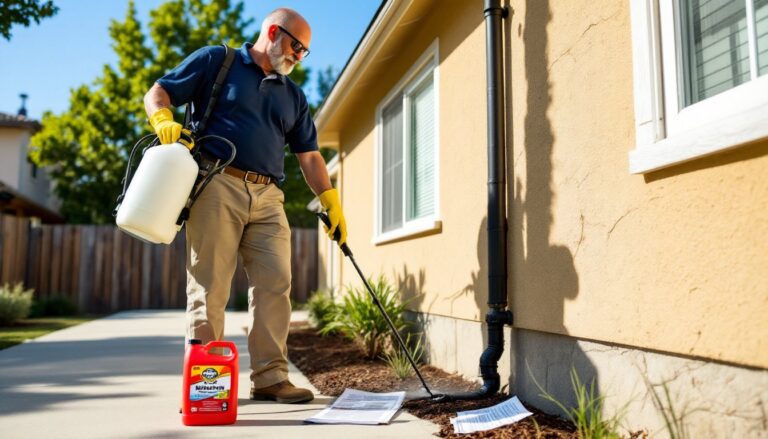
Treatment day varies by pest and method. General pest control usually involves a perimeter spray using a liquid insecticide applied to the foundation, around entry points, and in mulch beds. Interior treatment may include crack-and-crevice applications, gel baits in cabinets, or dust insecticides in wall voids. Re-entry times depend on the product: most modern formulations allow re-entry once surfaces are dry (typically 1-2 hours).
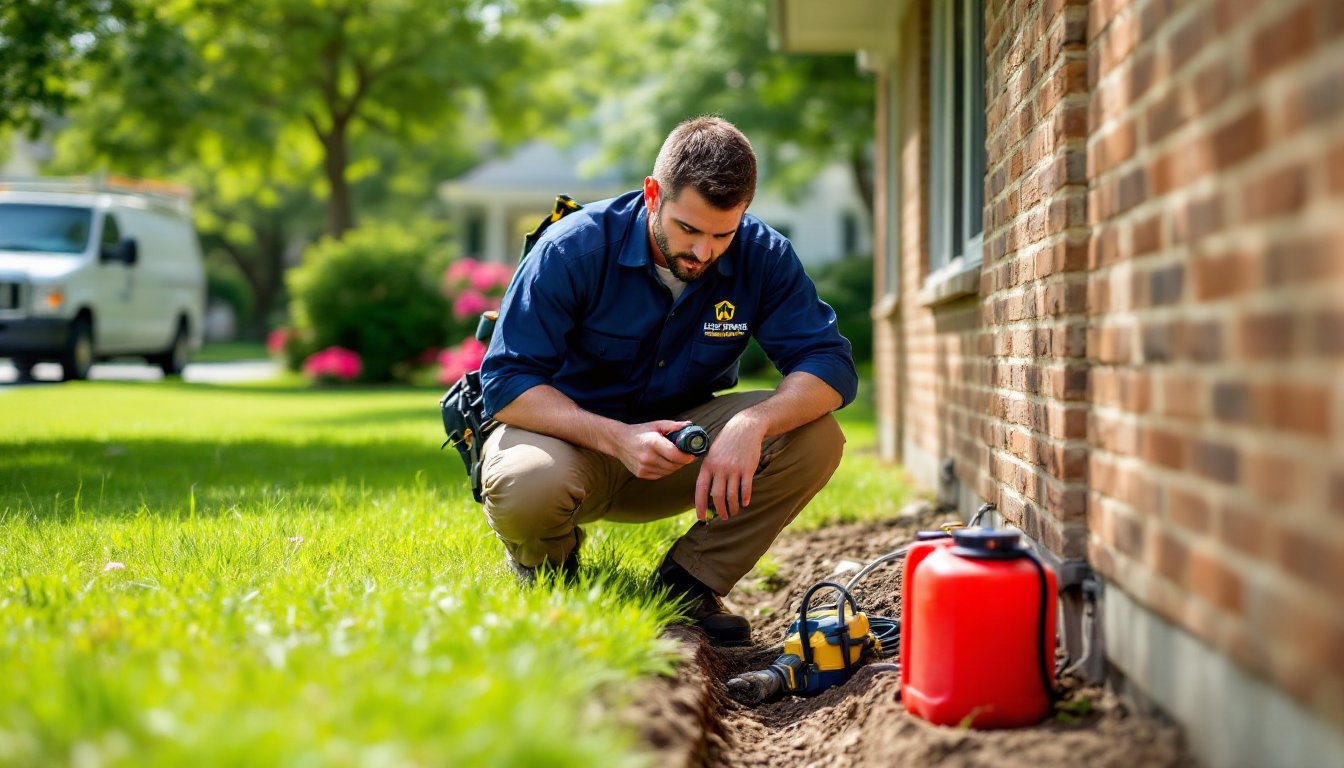
For termite liquid treatments, expect trenching around the foundation perimeter. The technician will dig a narrow trench (about 6 inches wide and 6 inches deep), apply termiticide to the soil, then backfill. Indoors, they’ll drill small holes in slab floors along the foundation wall, inject termiticide, then patch with cement. Bait station installation is less invasive: stations are placed in the soil every 10 feet around the structure and monitored quarterly.
Follow-up visits confirm treatment effectiveness and catch new activity early. Quarterly service is standard for general pests: termite monitoring can be annual or quarterly depending on the contract.
Always ask for Safety Data Sheets (SDS) for products used, especially if anyone in the household has chemical sensitivities or respiratory conditions. Technicians are required to provide this upon request.
Cost and Service Plans: What to Expect
Pest control pricing varies widely based on property size, pest type, treatment complexity, and regional market rates. Here’s a breakdown of typical cost ranges and contract structures for Turner’s services as of 2026.
One-time termite inspection (WDO report for real estate transactions) runs $75 to $125 for an average single-family home under 2,000 square feet. Larger homes or properties with multiple structures cost more. If active termites are found, treatment is quoted separately.
Initial termite treatment depends on method. Liquid barrier treatments for a 2,000-square-foot home typically range from $1,200 to $2,500, including drilling, application, and initial warranty. Bait systems start around $800 to $1,500 for installation, plus annual monitoring fees of $300 to $500. Drywood termite fumigation (whole-house tenting) can run $1,200 to $2,500 or more depending on home size and infestation severity.
General pest control service agreements usually cost $50 to $100 per quarterly visit for a standard single-family home. This covers interior and exterior treatment for ants, roaches, spiders, and other common pests. Monthly service, often recommended in high-pressure areas or for larger properties, runs $40 to $80 per visit.
Rodent control pricing varies. Initial inspection and exclusion (sealing entry points) can cost $300 to $800 depending on access difficulty and the number of gaps to seal. Ongoing trapping and monitoring might add $75 to $150 per visit over 4-6 weeks until elimination is confirmed.
Many homeowners bundle services through HomeAdvisor or similar platforms to compare local pricing, though going direct to Turner’s branch often allows for negotiation, especially if you’re signing a multi-year agreement.
Service agreements typically auto-renew annually. Read cancellation terms carefully: some contracts require 30-60 days’ written notice to avoid another year’s commitment. Warranties on termite treatments are usually transferable to a new homeowner (a selling point), but require continuous renewal to stay active.
Pricing can shift based on fuel costs, chemical availability, and labor markets. For budgeting, expect general pest control to run $200 to $400 annually on a quarterly plan, with termite protection adding another $300 to $500 per year if you opt for monitoring or renewable warranties.
If cost is a concern, ask about seasonal discounts (spring pre-pay deals are common) or bundled packages that combine termite and general pest service at a reduced rate. Paying annually upfront often knocks 10-15% off the total compared to quarterly billing.
Always get quotes in writing and compare service inclusions, not just the bottom-line price. A cheaper quote that excludes interior treatments or limits the number of retreats between scheduled visits can end up costing more if pests reappear and you’re charged extra service fees.