
Ants don’t need an invitation to colonize your yard. One day you’re mowing the lawn, the next you’re dodging mounds that pop up faster than dandelions. Whether they’re fire ants turning barefoot backyard time into a hazard or carpenter ants eyeing your deck joists, an ant infestation in your yard isn’t just a nuisance, it’s a problem that can spread to your home’s foundation, landscaping, and even indoor spaces. This guide walks through identifying the species you’re dealing with, choosing the right treatment (natural or chemical), and preventing future colonies from staking their claim on your property.
Table of Contents
ToggleKey Takeaways
- Identify ant species in your yard—fire ants, carpenter ants, pavement ants, and Argentine ants each require different treatment approaches for effective pest control.
- Natural remedies like diatomaceous earth, boiling water, and boric acid baits work for small to medium infestations, while chemical treatments with granular or liquid insecticides are necessary for large or aggressive ant colonies.
- Eliminate attractants by reducing moisture through proper irrigation, removing food sources, sealing foundation cracks, and maintaining clearance between mulch and your home’s foundation.
- Chemical granular insecticides provide residual protection for up to three months when broadcast across the lawn at the correct rate and watered in properly.
- Early detection through monthly yard monitoring and spot treatment of new mounds prevents colonies from splitting into satellite nests and spreading to your home.
- For persistent fire ant problems, coordinate neighborhood-wide treatment programs since isolated DIY efforts are less effective when infestations cross property lines.
Why Ants Invade Your Yard and How to Identify the Problem
Ants colonize yards for three reasons: food, moisture, and shelter. Your lawn offers all three. Decaying wood, mulch beds, irrigation systems, and pet food left outside create ideal nesting conditions. Most homeowners notice the problem when mounds appear in turf, along sidewalks, or near the foundation.
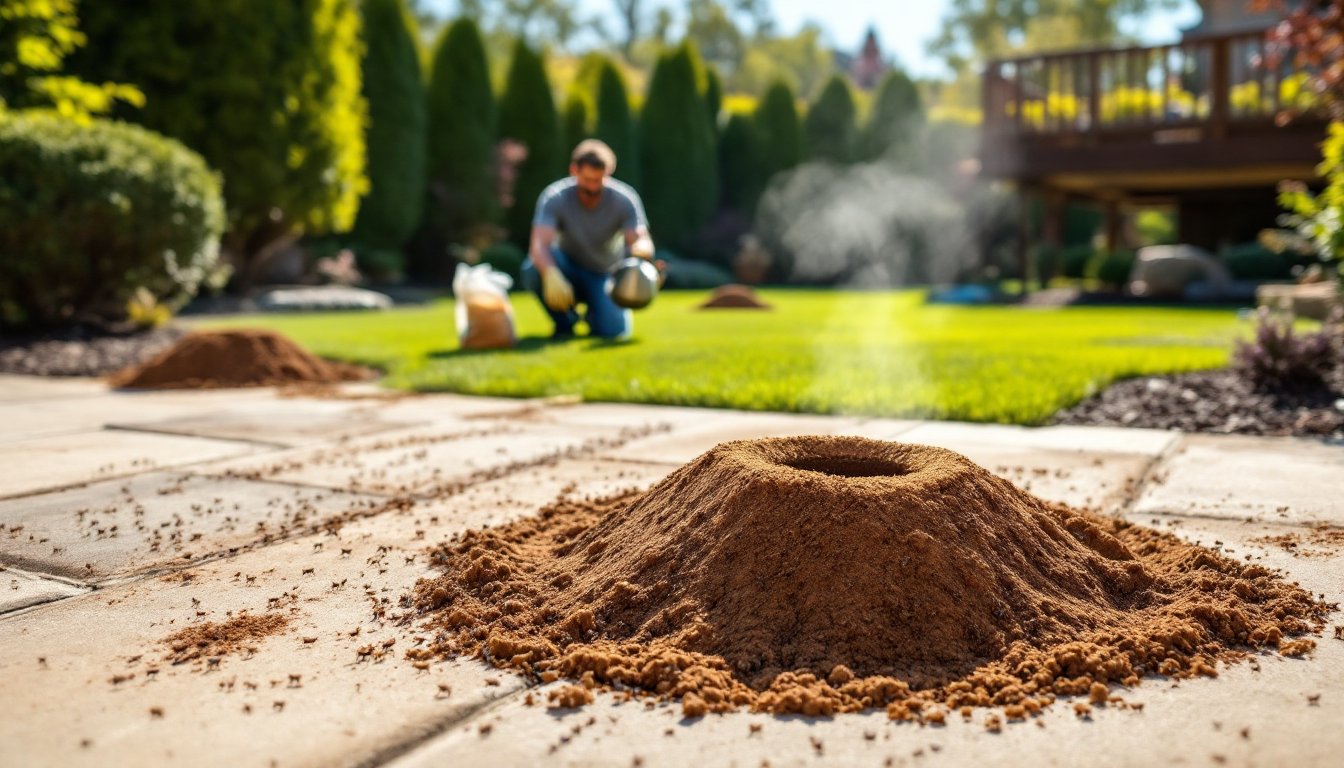
Identifying the ant species is critical because treatment varies. Fire ants build dome-shaped mounds up to 18 inches wide and deliver painful stings. Their aggressive behavior makes them a serious concern for families with kids or pets. Carpenter ants, larger, usually black, nest in dead wood and can migrate to wooden structures. Pavement ants create small piles of displaced sand between concrete slabs. Argentine ants form massive supercolonies and often invade homes looking for water.
Look for active trails during early morning or late evening. Follow worker ants back to their nest entrance, this is where treatment will be most effective. Check for mounds near sprinkler heads, under landscape rock, along fence lines, and at the base of trees. Disturbed soil or sawdust-like frass near wood indicates carpenter ant activity.
Moisture is a major attractant. Overwatering lawns, poor drainage, and leaky irrigation lines create habitable zones. Inspect downspouts, French drains, and low-lying areas where water pools after rain. Ants also exploit gaps under siding, cracks in concrete, and voids beneath pavers, all entry points to your home’s envelope.
Understanding ant behavior helps with timing. Most species are most active in spring and early summer when colonies expand. Fire ants, but, remain active year-round in warmer climates. If mounds reappear after treatment, you’re likely dealing with satellite colonies connected to a primary nest elsewhere in the yard or neighboring property.
Natural and Chemical Treatment Options for Yard Ant Control
DIY Natural Remedies That Work
Diatomaceous earth (DE) is a top choice for natural control. This fine powder, made from fossilized algae, damages the ants’ exoskeletons and causes dehydration. Use food-grade DE and apply it directly to mounds and along trails. Reapply after rain or irrigation since moisture reduces effectiveness. Wear a dust mask during application, DE is non-toxic but irritating to lungs.
Boiling water is the simplest method for small colonies. Pour 2-3 gallons directly into the mound entrance during early morning when most ants are inside. This works best on fire ant mounds in open turf. It won’t affect neighboring colonies, so treat each mound individually. Be cautious, boiling water kills grass and plants within the pour zone.
Boric acid bait stations target foraging workers who carry the toxin back to the colony. Mix 1 tablespoon boric acid with 1 cup sugar and enough water to form a paste. Place small amounts on cardboard near trails, away from pets and children. Ants feed on the bait, distribute it to the queen, and the colony collapses over 1-2 weeks. Refresh bait every few days if it dries out.
Other organic pest control approaches include essential oil sprays (peppermint or tea tree oil diluted in water) and vinegar solutions. These disrupt scent trails but won’t eliminate established colonies. They’re best used as deterrents around patios, doorways, and garden beds after primary treatment.
When to Use Chemical Treatments
Chemical treatments are necessary for large infestations, aggressive species like fire ants, or when natural methods fail. Granular insecticides containing bifenthrin or fipronil are broadcast across the lawn using a spreader at a rate of 2-4 pounds per 1,000 square feet. Water the lawn lightly after application to activate the product. These create a barrier that kills ants on contact and provides residual protection for up to three months.
Liquid insecticide drenches work faster for individual mounds. Mix a concentrate like permethrin or carbaryl according to label instructions (typically 1-2 ounces per gallon of water). Pour 1-2 gallons directly into each mound, ensuring the solution penetrates at least 12 inches deep. Treat in early morning or late evening when ants are least active at the surface.
Bait products like hydramethylnon or indoxacarb are slow-acting but highly effective. Workers carry the bait to the queen, eliminating the colony at its source. Broadcast baits work well for species like Argentine ants that form wide-ranging trails. Apply when the ground is dry and no rain is forecast for 24 hours. Avoid mowing for 2-3 days after application so ants have time to collect the bait.
Always wear nitrile gloves and safety glasses when handling concentrates. Read the product label for re-entry intervals, most require keeping pets and children off treated areas for 4-6 hours or until dry. Store pesticides in original containers in a locked, cool, dry location away from food and water sources.
For severe infestations affecting multiple properties or recurring fire ant problems, a licensed pest control professional may be necessary. They have access to commercial-grade products like fipronil-based mound treatments and can assess whether you’re dealing with a supercolony that requires coordinated neighborhood treatment. Homeowners dealing with broader bug problem solutions often find that professional intervention saves time and money compared to repeated DIY attempts.
Prevention Strategies to Keep Ants Out of Your Yard
Prevention starts with eliminating attractants. Store firewood at least 20 feet from the house on a rack that keeps it 6 inches off the ground. Ants nest in damp, decomposing wood, and stacked logs against the foundation provide a direct pathway indoors.
Adjust irrigation to avoid overwatering. Most turf needs 1-1.5 inches of water per week, including rainfall. Install a rain sensor on automatic systems to prevent unnecessary watering after storms. Fix leaky hose bibs, sprinkler heads, and drip lines immediately. Standing water and saturated mulch beds attract ants looking for moisture.
Maintain a 6-inch gap between mulch and your home’s foundation. Organic mulch like pine bark or hardwood chips retains moisture and provides nesting material. Consider using inorganic alternatives like river rock or pea gravel in a 12-18 inch perimeter around the house. This creates a dry zone that’s less hospitable to ants and other pests.
Trim tree branches and shrubs so they don’t touch the house or roof. Ants use overhanging vegetation as highways to attic vents and soffit gaps. Keep a 2-foot clearance between plants and siding to improve air circulation and reduce moisture buildup.
Seal cracks in concrete, expansion joints, and gaps around utility penetrations with a polyurethane or silicone-based caulk. Ants can exploit openings as small as 1/16 inch. Inspect foundation walls annually and fill voids with hydraulic cement if gaps exceed 1/4 inch.
Remove food sources. Don’t leave pet food bowls outside overnight. Clean up fallen fruit from trees and bird feeders regularly, both attract foraging ants. Compost bins should have tight-fitting lids and be located at least 50 feet from the house.
Apply a perimeter treatment with a residual granular insecticide twice per year (spring and fall) as a preventive measure. This creates a chemical barrier that intercepts foraging ants before they establish trails. Pair this with regular mowing, keeping grass at 2.5-3 inches reduces habitat for ground-nesting species. Seasonal insect prevention measures across your entire property help limit not just ants but a range of common yard pests.
Monitor your yard monthly for new mounds or trails. Early detection allows for spot treatment before colonies grow large enough to split into satellite nests. Mark treated areas with landscape flags so you can track whether colonies return to the same locations, a sign of deeper nesting issues or adjacent untreated colonies.
If you’re in an area with persistent fire ant pressure, consider participating in a neighborhood-wide treatment program. Fire ants spread rapidly across property lines, and isolated treatments are less effective than coordinated efforts. Some municipalities and homeowner associations offer subsidized control programs that improve long-term results.
For homeowners managing outdoor spaces with heavy landscaping, consulting resources like Today’s Homeowner or The Spruce can provide seasonal maintenance checklists that include pest monitoring as part of routine yard care.
Conclusion
Ant control in the yard isn’t a one-and-done fix, it’s an ongoing process of treatment, monitoring, and prevention. Identify the species, choose the right method, and address the conditions that attracted them in the first place. With consistent effort, you’ll reclaim your outdoor space and keep colonies from gaining a foothold near your home.