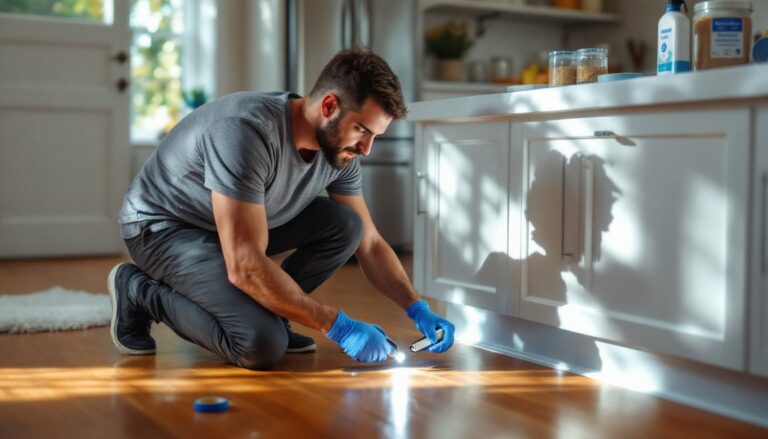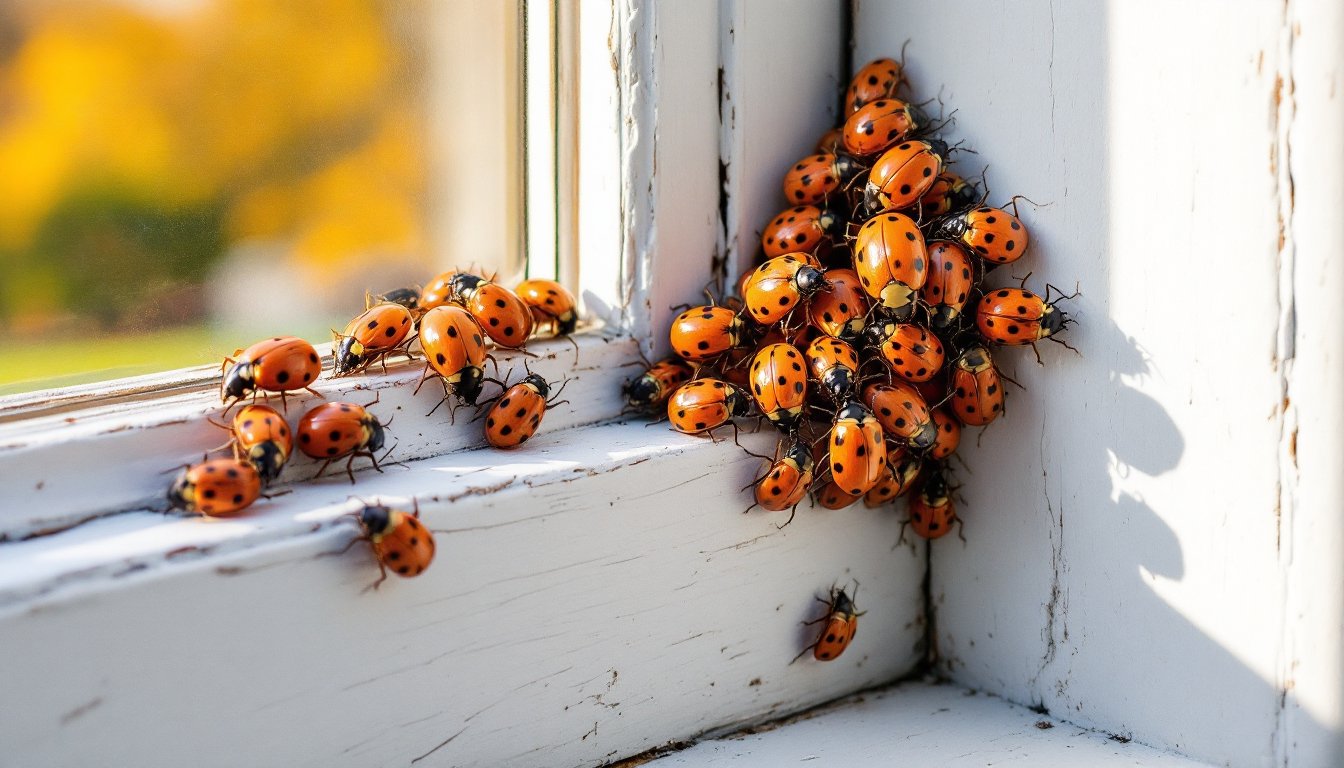

Ladybugs are garden heroes, voracious aphid eaters that save plants from sap-sucking pests. But when hundreds of them cluster inside window frames every fall, they cross the line from helpful to headache. Unlike termites or roaches, ladybugs don’t damage homes or spread disease, but their sheer numbers and the staining from their defensive secretions make large infestations a nuisance worth addressing. The trick is managing indoor invasions without wiping out the beneficial population outside. This guide walks through identifying real problems, preventing entry, and safely removing clusters when they do get in.
Table of Contents
ToggleKey Takeaways
- Ladybug pest control relies most effectively on exclusion—sealing entry points smaller than 1/16 inch before mid-September prevents invasions before they start.
- Asian lady beetles, not native species, are the primary home invaders, and their pheromone trails attract year-round clustering to the same sites if not addressed.
- When infestations occur indoors, safe removal using a shop vac with a nylon stocking or hand collection is preferable to pesticides, allowing beneficial beetles to be relocated outdoors.
- Yellowish defensive secretion stains from large infestations are difficult to remove and signal a true problem requiring action, while occasional beetles wandering inside are not a concern.
- Professional pest control services are warranted for infestations exceeding 1,000 beetles, recurring annual invasions despite sealing efforts, or when household members experience allergic reactions to beetle secretions.
Why Ladybugs Invade Homes (And When They Become a Problem)
Ladybugs seek shelter in late fall as temperatures drop, a behavior called overwintering aggregation. They’re drawn to warm, sun-facing exteriors, especially light-colored siding, and slip through surprisingly small gaps around windows, soffits, and attic vents. Once inside, they congregate in attics, wall voids, and around window casings, sometimes by the thousands.
The species most prone to home invasion is the Asian lady beetle (Harmonia axyridis), introduced to North America in the 1980s for agricultural pest control. Unlike native ladybugs that overwinter outdoors under leaf litter, Asian lady beetles prefer structures. They release pheromones that attract other beetles to the same site year after year, turning a minor issue into an annual event.
A dozen ladybugs in a basement window? Not a problem. But when clusters reach hundreds, crawling across ceilings, dropping into light fixtures, or leaving yellowish stains (defensive hemolymph) on walls and fabrics, it’s time to act. The stains are difficult to remove and can discolor paint or upholstery. Some people also experience minor allergic reactions to the beetles’ secretions, including skin irritation or respiratory symptoms.
Timing matters. Most invasions happen during sunny fall afternoons when outdoor temperatures hit 55–65°F. If you spot a few scouts in September or early October, expect the main wave within two weeks.
Identifying a Ladybug Infestation vs. Occasional Visitors
A handful of ladybugs wandering indoors on a warm day isn’t an infestation, they’re likely stragglers that slipped in through an open door. True infestations show these signs:
- Clustered masses of 50+ beetles in attics, crawl spaces, or behind curtains
- Repeated appearances in the same spots, especially near south- or west-facing windows
- Yellowish smear marks on walls, window sills, or fabric from defensive secretions
- Dead beetles accumulating in light fixtures, windowsills, or floor corners
- Pheromone odor, a faint, musty smell near congregation sites
Asian lady beetles vary in color from pale orange to deep red, with 0–19 black spots. The key identifier is the white or cream-colored pronotum (the shield behind the head) marked with a black M- or W-shaped pattern. Native species are typically smaller, more uniformly spotted, and rarely invade homes in large numbers.
Check these common entry zones during initial scouting:
- Attic vent screens and gable vents
- Window and door frames, especially older wood frames with shrinkage gaps
- Soffit and fascia joints
- Utility line penetrations (cable, phone, electric)
- Chimney caps and gaps around flashing
If you find clusters in multiple rooms or notice fresh beetles appearing daily even though removing them, you’ve got an active infestation requiring systematic prevention and removal.
Natural Prevention Methods to Keep Ladybugs Out
The most effective organic pest control strategy for ladybugs is exclusion. Once they’re inside wall voids, extraction is nearly impossible, sealing entry points before the fall migration is critical.
Timing: Complete exterior sealing by mid-September in most regions, earlier in northern climates. Ladybugs scout for sites in early fall: late sealing traps beetles already inside.
Exterior deterrents:
- Knock-down sprays: Apply pyrethrin-based insecticides to south and west exterior walls in late September. This won’t harm established garden populations but discourages beetles from landing and clustering. Reapply after rain.
- Light-colored siding: Dark siding absorbs more heat and attracts more beetles. If re-siding, lighter colors reduce appeal.
- Landscaping adjustments: Trim vegetation away from siding, beetles use plants as bridges to walls.
Interior repellents:
While less proven, some homeowners report success with these low-toxicity methods:
- Citrus oil or menthol sprays around known entry points (reapply weekly)
- Diatomaceous earth dusted in attics and crawl spaces (wear a dust mask during application, DE is a respiratory irritant)
- Bay leaves or cloves in windowsills (anecdotal: minimal scientific backing)
None of these replace physical sealing, but they add a secondary deterrent layer.
Sealing Entry Points and Home Weatherproofing
Ladybugs slip through gaps as small as 1/16 inch, tighter than the typical 1/4-inch mouse exclusion standard. Use a methodical approach:
Materials needed:
- Silicone or acrylic latex caulk (paintable for visible seams)
- Expanding foam sealant for larger gaps (trim flush after curing)
- Copper or stainless steel mesh (for vents and larger openings, galvanized rusts)
- Door sweeps and weatherstripping (vinyl or silicone bulb types)
- Caulk gun, utility knife, wire brush
Step-by-step sealing process:
- Inspect from the outside on a sunny afternoon. Walk the perimeter with binoculars to spot high gaps.
- Clean all surfaces. Caulk won’t adhere to dirt, old paint flakes, or cobwebs. Use a wire brush and wipe with a damp rag.
- Seal window and door frames. Run a bead of caulk where trim meets siding. Check both the exterior stop and interior casing.
- Address soffit and fascia joints. These are prime entry zones. Fill gaps where sections meet or where fascia attaches to the roof edge.
- Cover vents with fine mesh. Replace damaged attic vent screens with 1/8-inch hardware cloth. Secure with screws, not staples (beetles push through stapled edges).
- Foam around utility penetrations. Cable, dryer vents, and outdoor faucet entries often have 1/4-inch gaps. Foam fills irregular spaces better than caulk.
- Install or replace door sweeps. The gap under exterior doors should be less than 1/8 inch. Adjustable sweeps work best for uneven thresholds.
- Check chimney caps. Ensure the spark arrestor mesh is intact and gaps around the cap flashing are sealed.
Pro tip: Work from top to bottom, start at the roofline and move down. Beetles that land high on the house tend to crawl upward into soffits and attic vents.
Weatherproofing for pest exclusion also improves energy efficiency. Sealed homes often see a 10–15% reduction in heating costs, and the materials pay for themselves within a season or two.
Safe Removal Techniques for Indoor Ladybug Clusters
When ladybugs breach your defenses, removal should prioritize relocation over killing, they’re beneficial outdoors and non-toxic methods work just as well.
Vacuum removal (best for large clusters):
Use a shop vac with a clean filter and no prior pesticide residue. Stretch a section of nylon stocking over the intake nozzle (inside the hose or wand), secured with a rubber band. Beetles collect in the stocking instead of the canister. After vacuuming, tie off the stocking and release beetles outdoors away from the house, at least 20 feet from exterior walls.
Empty the stocking immediately. Ladybugs confined in a vacuum bag for more than an hour often die from stress and heat.
Hand collection (for small numbers):
Scoop beetles into a jar or plastic container using a piece of stiff paper. Release them in a sheltered outdoor spot like a woodpile or dense shrub bed where they can resume hibernation.
Light traps (passive, ongoing control):
Place a desk lamp near a shallow pan of soapy water in an infested room at night. Beetles are attracted to light and fall into the water. This works for stragglers but won’t handle a major infestation.
What NOT to do:
- Don’t squash beetles indoors. The yellowish hemolymph stains fabrics and painted surfaces and releases an odor that attracts more beetles.
- Avoid aerosol insecticides in living spaces. Beetles die in wall voids, attracting carpet beetles and other scavengers. Dead beetle accumulation also worsens odor issues.
- Don’t seal them inside. If beetles are already in the attic in October, sealing exterior gaps traps them. Wait until spring when they leave naturally, then seal entry points.
Persistent indoor activity in winter:
If beetles emerge from walls during warm winter days, they’re likely in wall voids near heat sources (chimneys, furnace flues). A licensed pest control professional can apply targeted dust insecticides (like boric acid or diatomaceous earth) into wall cavities through small drilled access points, which are then plugged and painted. This is a last-resort structural treatment, not a DIY task.
When to Call a Professional Pest Control Service
Most homeowners can handle ladybug prevention and removal with basic tools and weekend effort. But certain situations warrant professional help:
Large-scale infestations (1,000+ beetles):
When clusters cover entire attic ceilings or fill multiple rooms, the volume overwhelms DIY methods. Professionals use HEPA-filtered vacuums and can access hard-to-reach voids without damaging finishes.
Recurring annual invasions even though sealing:
If beetles return to the same site year after year even after thorough exclusion work, they may be entering through hidden structural gaps, rotted soffit boards, failed roof flashing, or gaps in brick mortar. Pest control pros often work with contractors to identify and repair these defects.
Wall void infestations:
Beetles inside walls require drilling access holes for dust treatment, a precision job. Incorrect placement or over-application can create long-term odor or residue issues. Licensed applicators know Integrated Pest Management (IPM) protocols that minimize pesticide use while targeting the problem.
Health concerns:
If household members show allergic reactions (skin rashes, respiratory irritation) to beetle secretions, professional-grade PPE and containment methods reduce exposure during removal.
What to expect from a pro service:
- Inspection: Detailed exterior and attic assessment, often using thermal imaging to locate hidden clusters
- Exclusion plan: Identification of all entry points with repair recommendations
- Treatment options: Low-toxicity pyrethrin barriers, dust treatments for voids, or mechanical removal
- Follow-up: Seasonal monitoring or re-treatment guarantees
Cost range: Expect $150–$400 for inspection and exterior treatment of an average single-family home: add $200–$600 for wall void treatments or extensive sealing work. Pricing varies by region and infestation severity.
For multi-year bug problem solutions, some services offer annual contracts with pre-season exclusion work and guaranteed re-treatment, typically $300–$500/year.
Conclusion
Ladybug invasions are predictable, preventable, and manageable without toxic overkill. Seal early, remove gently, and keep the beneficial bugs outside where they belong. A few hours of caulk work in September beats vacuuming beetles all winter, and your garden will thank you come aphid season.