
Wasps aren’t just annoying, they’re dangerous. A single paper wasp nest under your eaves can house hundreds of aggressive insects ready to defend their territory. Unlike bees, wasps can sting multiple times, and for the roughly 2 million Americans with venom allergies, an encounter can turn life-threatening. Whether you’ve spotted scouts circling your deck or found a fist-sized nest tucked in your soffit, understanding wasps pest control methods, from DIY deterrents to knowing when to call the pros, can mean the difference between a safe backyard and a trip to urgent care.
Table of Contents
ToggleKey Takeaways
- Wasps can sting multiple times and pose serious risks to the roughly 2 million Americans with venom allergies, making wasp pest control a safety priority for your home.
- Identify wasp infestations early by watching for increased activity in specific areas, visible nests (umbrella-shaped for paper wasps, ground holes for yellow jackets), and chewed wood marks on deck railings and fence posts.
- DIY wasp pest control works best on small, newly established nests tackled in early morning or dusk with aerosol sprays, soap-and-water solutions, or shop vac trapping.
- Seal entry points in spring, keep trash tightly sealed, clean up fallen fruit within 24 hours, and use peppermint oil spray on eaves to prevent queens from establishing new nests.
- Call a professional pest control service for nests larger than a softball, located in high-traffic areas, inside wall voids, or if you’re allergic to stings—expect $150–$400 for standard removal.
- Consistent seasonal maintenance (15 minutes every few weeks) is more effective than reactive removal, with spring scouting and fall cleanup being the most critical prevention windows.
Understanding Wasps and Why They Invade Your Property
Wasps are opportunistic. They’re hunting for three things: food, shelter, and building materials. Unlike honeybees that die after stinging, wasps can attack repeatedly, making them far more aggressive when threatened.
Most homeowners encounter one of three species: paper wasps (those umbrella-shaped nests under eaves), yellow jackets (ground-nesters that swarm near trash cans), and bald-faced hornets (the football-sized aerial nests in trees). Each builds colonies that peak in late summer, when populations can explode from a few dozen to several hundred workers.
Your property attracts wasps for predictable reasons. Open garbage bins, fallen fruit from trees, and sugary residue on outdoor furniture act like neon signs. Gaps in siding, uncapped chimneys, and hollow fence posts offer ready-made nesting sites. Wasps also scavenge wood fibers from fences, decks, and sheds to build their papery nests, that weathered 2×4 railing isn’t just rotting, it’s a construction supply depot.
Timing matters. Queens emerge from hibernation in April and May, scouting for nest sites. Spotting a lone wasp inspecting your porch overhang in spring means you’ve got a narrow window to deter her before she commits. By July, colonies are established and defensive. By September, workers become erratic and aggressive as the colony begins to collapse, making late-season encounters especially risky.
Signs of a Wasp Infestation Around Your Home
You don’t always see the nest before you’ve got a problem. Watch for these indicators:
Increased wasp activity in one area. If you’re consistently dodging wasps near a specific corner of your house, shed, or garage, there’s likely a nest within 15–20 feet. Wasps don’t wander aimlessly, they follow flight paths to and from their nest.
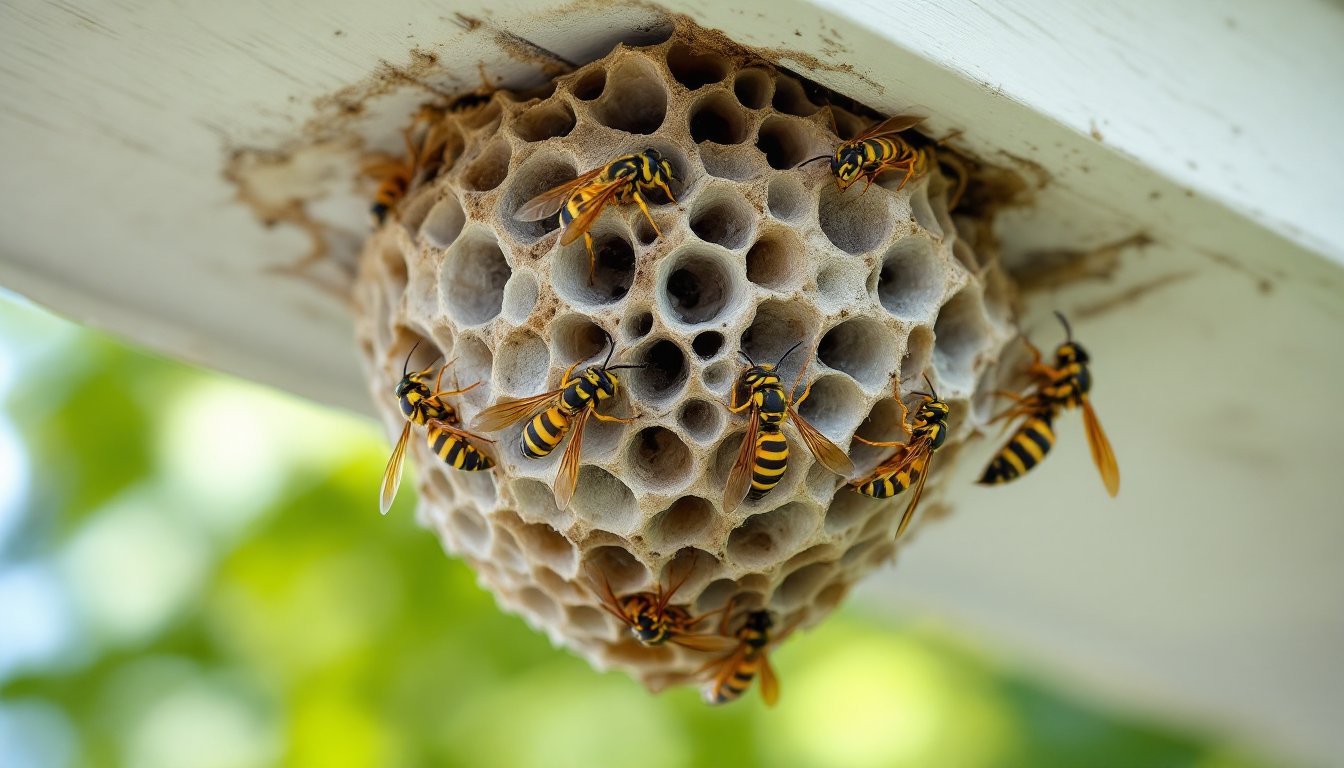
Visible nests. Paper wasp nests look like inverted umbrellas with exposed hexagonal cells, often attached to horizontal surfaces like eaves, porch ceilings, or window frames. Yellow jacket nests are typically hidden, look for ground holes with wasps entering and exiting, or nests tucked inside wall voids and attic spaces. Bald-faced hornet nests are gray, papery spheres hanging from tree branches or attached to structures.
Chewed wood or scrape marks. Wasps strip weathered wood to create nest pulp. Check fence posts, deck railings, and shed siding for thin, scraped lines running with the grain.
Audible buzzing inside walls. If you hear a persistent hum inside an exterior wall, soffit, or attic, you may have yellow jackets nesting in the cavity. This requires immediate attention, colonies inside wall voids can grow unchecked and cause structural damage.
Dead wasps indoors. Finding dead wasps inside your home, especially in upper-floor rooms or attics, often means they’re nesting in your siding or roof and finding gaps to enter living spaces.
DIY Wasp Control Methods That Actually Work
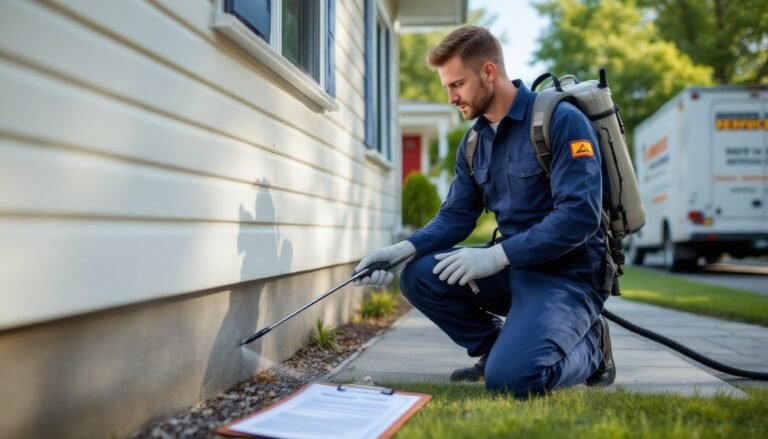
DIY wasp pest control near me approaches work best on small, newly established nests and for prevention. Tackle nests in early morning or after dusk when wasps are sluggish and inside the nest. Never attempt DIY removal on nests larger than a softball or located in high-traffic areas.
Aerosol wasp sprays (look for products with permethrin or tetramethrin) shoot a stream 15–20 feet, letting you keep distance. Spray directly into the nest entrance for 10–15 seconds, then retreat. Wait 24 hours before knocking down the nest with a long pole. Always wear long sleeves, pants, gloves, and safety goggles. If you disturb the nest and wasps swarm, run indoors immediately, don’t swat or flail.
Soap and water is an effective, low-toxicity option for accessible nests. Mix 2 tablespoons of dish soap per quart of water in a garden sprayer. Soap clogs wasps’ breathing pores (spiracles), suffocating them. Drench the nest thoroughly at dusk. This method works well on paper wasp nests under eaves but is less effective on enclosed yellow jacket nests.
Vacuum trapping handles ground nests safely. Use a shop vac with a long hose attachment. Position the nozzle near the nest entrance at dawn, turn it on, and let it run for several hours. Wasps returning to the nest get sucked in. Seal the vac bag in a plastic garbage bag and freeze it for 48 hours before disposal.
Avoid gasoline, fire, or sealing nest entrances without eliminating the colony first. Trapping wasps inside wall voids forces them to chew new exits, often into your living space.
Natural Wasp Repellents and Prevention Strategies
Natural repellents won’t eliminate established colonies, but they deter scouts from nesting. Peppermint oil is the most effective: mix 10–15 drops with water in a spray bottle and apply to eaves, porch ceilings, and window frames weekly during spring. Wasps dislike the scent and avoid treated areas.
Fake nests work on paper wasps, which are territorial. Hang a crumpled brown paper bag or commercial decoy nest in early spring. Wasps scout the area, see a “competitor,” and move on. This doesn’t work on yellow jackets, which nest in cavities.
Seal entry points before spring. Caulk gaps in siding, install ¼-inch mesh screens over soffit vents and chimney caps, and fill hollow fence posts with expanding foam or wooden plugs. Walk your property in March and address any openings larger than a pencil eraser.
Keep trash cans tightly sealed, clean up fallen fruit within 24 hours, and rinse recyclables before storing them outdoors. Wasps are scavengers, remove the buffet, and they’ll hunt elsewhere. Many of these techniques align with broader organic pest control approaches that reduce reliance on chemicals.
When to Call a Professional Pest Control Service
Some wasp problems are DIY-friendly. Others aren’t. Can pest control get rid of wasps? Absolutely, and in situations where safety or nest accessibility is a concern, they should.
Call a licensed pest control service if:
- The nest is larger than a softball. Colonies this size contain hundreds of wasps capable of coordinated attacks.
- Nests are in high-traffic areas like front entries, play structures, or near air conditioning units where vibrations trigger aggression.
- You’re allergic to wasp stings. Don’t gamble. Even if you carry an EpiPen, professional removal eliminates the risk entirely.
- The nest is inside a wall void, attic, or underground. These require specialized equipment, dust insecticides for wall voids, sub-slab injections for ground nests, and knowledge of structural access points.
- Previous DIY attempts failed. If you’ve sprayed a nest twice and wasps are still active, the colony is either larger than visible or has secondary entrances.
Professional commercial pest control services use microencapsulated insecticides that remain active for weeks, ensuring returning foragers contact treated surfaces and die. They also have protective gear rated for multiple stings and liability insurance if something goes wrong, two things homeowners lack.
Cost varies by region and nest complexity, but expect $150–$400 for standard residential wasp removal according to project data from HomeAdvisor. Ground nests and wall-void treatments run higher due to labor and specialized products. Multiple nests or emergency same-day service add 20–30% to base pricing. If you’re uncertain about who to call to get rid of a wasp nest, pest control companies specializing in stinging insects are your safest bet.
Safe Wasp Nest Removal Techniques for Homeowners
If you’re confident the nest is small, accessible, and you’re not allergic, follow these steps for safe removal:
1. Prep your gear. Wear a long-sleeved shirt, long pants, closed-toe boots, leather gloves, and safety goggles. Tuck pant legs into boots and sleeves into gloves, wasps crawl into gaps. A beekeeper’s veil is overkill for a small paper wasp nest but cheap insurance.
2. Work at dawn or dusk. Wasps are cold-blooded. Temperatures below 50°F slow their reaction time. Early morning is ideal, most workers are inside and lethargic.
3. Approach from the side, never below. Wasps drop when agitated. Position yourself so the nest is at eye level or slightly above, and you’re not directly underneath.
4. Apply insecticide per label directions. Shake the can, aim the nozzle at the nest entrance, and spray for 10–15 seconds. Don’t empty the can, over-application causes runoff and wastes product. Back away slowly. Do not knock the nest down immediately.
5. Wait 24 hours. Confirm all activity has ceased. If wasps are still entering/exiting, repeat treatment.
6. Remove the nest. Use a long-handled tool (a paint roller extension pole works well) to dislodge the nest into a heavy-duty garbage bag. Seal and dispose of it immediately. Don’t leave it on the ground, wasps can survive inside for hours.
7. Scrape the attachment point. Wasps leave pheromone markers. Scrub the area with soapy water and a stiff brush to remove chemical traces that attract new colonies.
Never stand on a ladder while spraying. Wasps swarm in seconds, and falling off a 10-foot ladder causes more ER visits than stings. If the nest requires ladder access and chemical application simultaneously, hire a pro.
Preventing Future Wasp Problems Year-Round
Wasp prevention is 80% timing and 20% maintenance. The goal is making your property uninviting before queens start nest-building in spring.
Spring (March–May): Walk your property weekly. Look for queens inspecting eaves, vents, and other sheltered spots. A single queen wasp flying slowly near structures isn’t foraging, she’s house-hunting. Spray peppermint oil deterrent on likely nesting sites. Seal any new gaps in siding, fascia, or soffit discovered during winter freeze-thaw cycles.
Summer (June–August): Keep food and trash sealed. Wasps are attracted to protein (they hunt other insects) early in the season, then switch to sugars as the colony matures. Hose down garbage cans weekly to remove residue. If you’re grilling or eating outdoors, set out decoy food stations 15–20 feet from your gathering area, a small plate of cut fruit or sugary soda draws wasps away from people.
Fall (September–November): After the first hard frost, most wasp colonies die. Only fertilized queens survive, hibernating in leaf litter, woodpiles, and mulch. Remove old nests, they won’t be reused, but they attract other pests. Rake leaf piles away from foundations and store firewood at least 20 feet from the house. Resources like The Spruce offer additional seasonal maintenance checklists for pest-proofing.
Winter (December–February): Inspect attics, crawl spaces, and sheds for hibernating queens. They’re sluggish and easy to vacuum up or crush. Repair any structural damage before spring.
Year-round maintenance: Trim tree branches and shrubs so they don’t touch your house, they’re highways for wasps scouting nest sites. Replace weathered wood on decks and fences before wasps harvest it for pulp. Keep compost bins at least 50 feet from living areas and use tight-fitting lids.
Consistency matters more than intensity. Fifteen minutes of inspection and prevention every few weeks beats a weekend spent suiting up in protective gear and dodging angry insects.